
Fake account creation is the deliberate registration of online accounts with false, stolen, or synthetic information. Attackers may use bots, disposable contact details, proxy networks, device farms, or human-assisted services to create accounts that look legitimate. Those accounts can later support promotion abuse, phishing, spam, fake reviews, credential attacks, scams, or coordinated manipulation.
For a business, the registration event is not a low-risk form fill. It is the moment when an untrusted device, identity, and behavior pattern first enters the customer lifecycle. The right response is a layered decision: identify risk early, apply proportionate verification, and keep a clear path for legitimate users.
What Is Fake Account Creation?
Fake account creation is a form of account fraud in which a person, automated tool, or organized group opens accounts using information that is fabricated, stolen, recycled, or controlled at scale. A fake account may be completely invented, or it may combine real details with synthetic data to pass basic checks.
The important distinction is intent and control. A customer creating one account with accurate information is normal onboarding. A network creating hundreds of accounts from linked devices, disposable emails, repeated payment instruments, or scripted journeys is registration abuse—even when each individual profile looks plausible.
How Fake Account Creation Works
Most campaigns combine four layers:
- Identity material. Attackers collect breached data, generate synthetic names and addresses, or mix real and invented attributes.
- Contact infrastructure. Disposable email inboxes, aliases, virtual numbers, and rented verification services provide one-time credentials.
- Automation and scale. Scripts, headless browsers, emulators, and bot frameworks repeat the signup flow while varying timing and request details.
- Account farming. Newly created accounts may be aged, given activity, sold, or held until a promotion, event, or fraud opportunity appears.
Basic controls often inspect only whether required fields are present or whether an email can receive a message. A coordinated campaign can satisfy those checks while reusing the same device environment, network relationships, interaction patterns, or business-logic target. That is why registration security needs signals from the environment and behavior, not only identity fields.
How Fake Accounts Create Business Risk
The account itself is usually an entry point to a second abuse objective:
- Promotion and trial abuse: repeatedly claim coupons, referrals, free trials, loyalty points, or limited offers.
- Fake reviews and engagement: manufacture ratings, comments, follows, or votes that distort trust and analytics.
- Phishing and social engineering: create credible personas that send messages, links, or support requests.
- Credential and payment testing: use large account sets to test reused credentials or stolen payment details.
- Resale and account farming: age or package accounts for later resale, marketplace abuse, or coordinated campaigns.
- Scams and financial crime: route illicit transactions or impersonate trusted brands and people.
- Influence and spam operations: create the appearance of grassroots activity or flood communities with unwanted content.
The same registration weakness can therefore affect marketing, fraud, trust and safety, customer support, compliance, and revenue teams. Fake accounts create measurable risk across the customer lifecycle:
| Risk area | What changes operationally | Useful indicator | |—|—|—| | Revenue leakage | Offers, inventory, trials, or paid services are consumed by coordinated accounts | Cost per redeemed offer; repeat redemption rate | | Trust and reputation | Reviews, referrals, and community activity no longer represent real customers | Abnormal account-to-action ratios; moderation removals | | Security exposure | Accounts become channels for phishing, credential attacks, and malware delivery | Reported abuse per new-account cohort | | Data quality | Growth, conversion, and retention dashboards include controlled identities | Cohort activation and retention by risk segment | | Operations | Support, investigations, chargebacks, and appeals increase | Analyst hours per 1,000 registrations |
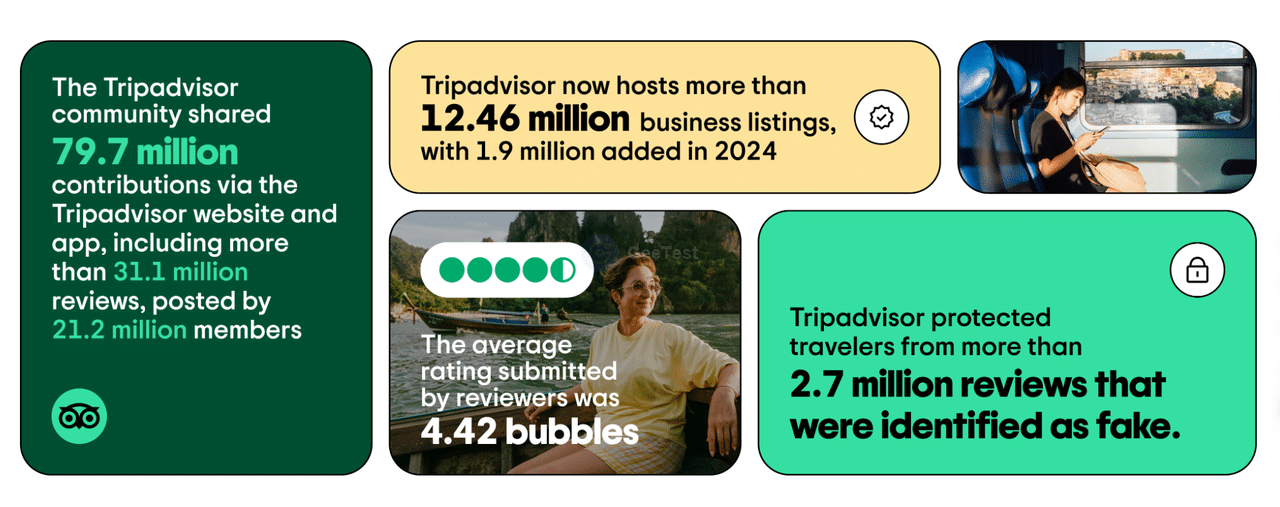
The Guardian reported on scam Facebook pages and deepfake-related losses. Tripadvisor’s transparency report documents fraudulent-review detection and removal. The 2025 Spider AF Ad Fraud White Paper provides evidence about advertising fraud, while Forbes reported Meta account removals associated with scam operations. These sources are directional evidence, not universal benchmarks; teams should validate each figure and dataset scope before using it for forecasting.
Do not treat every unusual account as malicious. A shared household, corporate VPN, privacy tool, or accessibility workflow can create legitimate overlap. Good controls combine multiple signals and provide review or recovery paths instead of relying on one hard block.
How to Detect Fake Accounts at Registration
Detection works best when the signup event is connected to later outcomes. Monitor five signal families:
Velocity and concentration. Look for bursts of registrations, repeated referral codes, many accounts from one network range, or a sharp change during a campaign. Rate limits are useful, but attackers may distribute traffic across residential or mobile proxies.
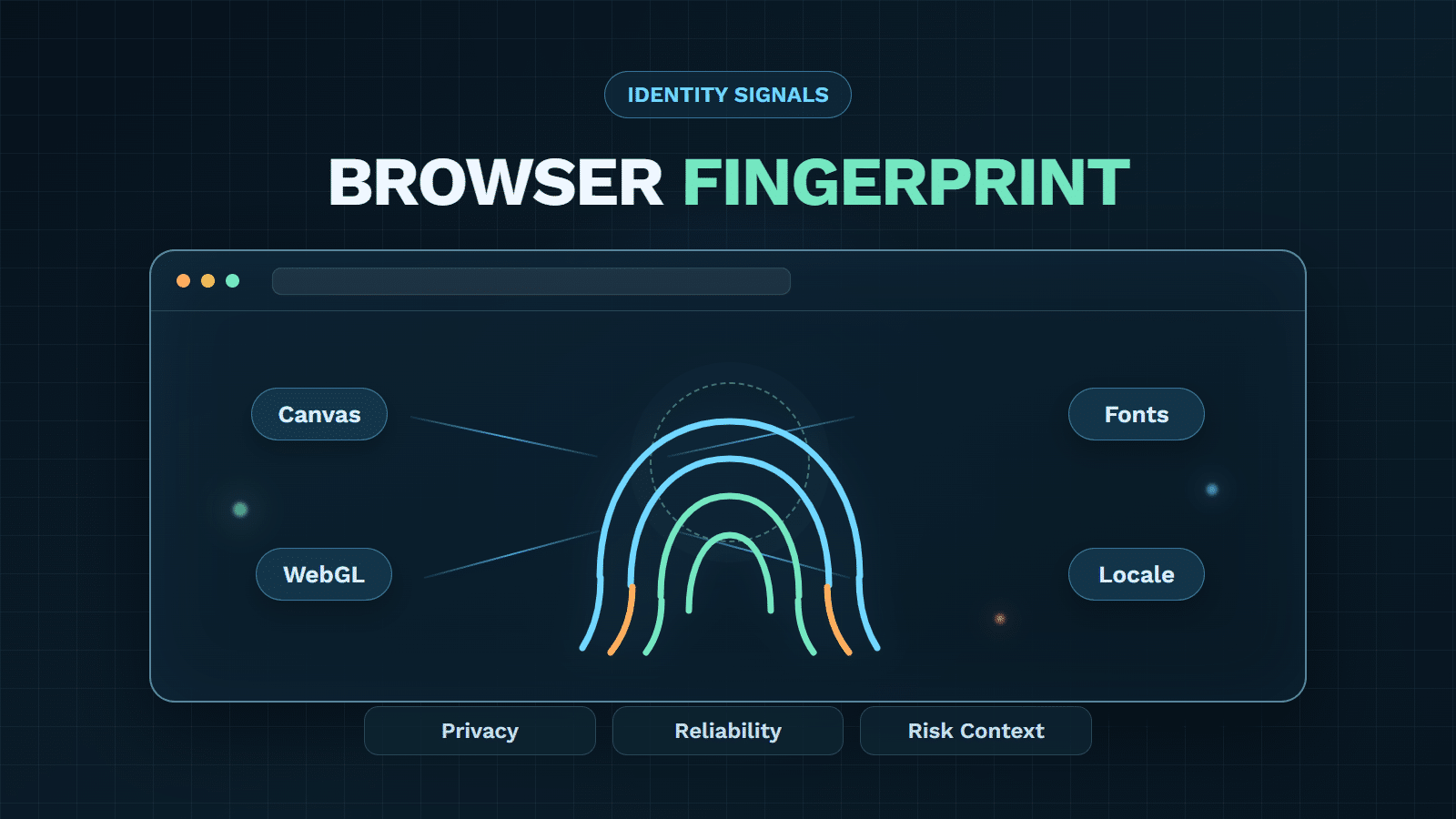
Device and environment. Compare device identifiers, emulator indicators, browser configurations, automation traces, and repeated environment combinations. A rotating IP does not make a stable device cluster disappear.
Contact and identity quality. Disposable domains, alias patterns, virtual numbers, inconsistent country and language data, and impossible profile combinations are useful risk inputs. They are signals—not automatic proof.
Interaction behavior. Review typing cadence, pointer or touch trajectories, focus changes, navigation order, challenge behavior, and time spent on fields. Scripted journeys often look consistent across accounts even when values change.
Post-registration intent. Connect the account to its first actions: coupon claims, password resets, messaging, listing creation, payment attempts, or high-value inventory access. A low-quality account that immediately targets a valuable workflow deserves more scrutiny than a dormant account.
Teams can use a fraud detection framework to organize these signals, and a device intelligence guide to separate device context from identity or transaction evidence.
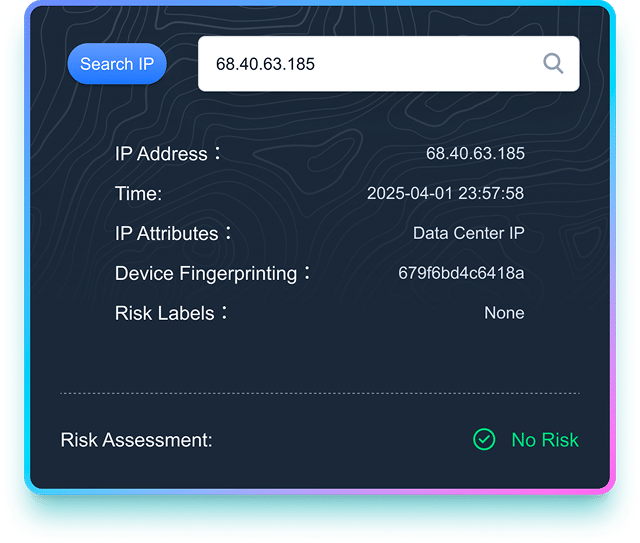
The interface is illustrative: its visible No Risk result is not evidence that a fake account was detected. In production, device fields should be combined with account, behavior, velocity, and business-context signals before action.
How to Prevent Fake Account Creation Without Adding Friction
Prevention should be layered and risk-based:
- Map the registration journey. Identify where accounts gain value: sign-up, referral, coupon, messaging, listing, wallet, or checkout.
- Score risk before issuing benefits. Use velocity, device, network, contact, and behavior signals before granting high-value entitlements.
- Step up selectively. Ask suspicious traffic for stronger verification while allowing low-risk users to continue with minimal friction.
- Limit business-logic abuse. Add per-device, per-account, and per-identity counters for promotions, referrals, and sensitive actions.
- Separate observe from enforce. Test thresholds in shadow or monitoring mode before blocking, and measure false positives by cohort.
- Link registration to lifecycle monitoring. Re-evaluate accounts when their behavior changes; registration controls alone cannot cover every downstream abuse.
- Provide recovery and review. Legitimate users need an explanation, accessible alternatives, and a path to resolve a mistaken challenge.
For a broader control framework, see the fraud prevention guide and ecommerce fraud prevention framework. If the team is evaluating a broader bot detection solution, include registration, login, promotion, and API workflows in the pilot rather than testing only a single page.
How GeeTest Supports Registration-Abuse Defense
GeeTest can fit into a layered registration policy when the business needs both abuse resistance and a usable onboarding flow.
Adaptive verification at the right moment. GeeTest Adaptive CAPTCHA can verify human interaction and filter abnormal traffic. A risk-based policy can keep low-risk journeys quiet while escalating suspicious signup attempts instead of presenting the same challenge to everyone.
Device context for account networks. GeeTest Device Fingerprinting provides device identity and risk signals relevant to fake accounts, emulators, bots, VPNs, cloud phones, and device-masking environments. It should be used as an input to a decision, not as a standalone verdict.
Customer-owned policy orchestration. A customer-owned or integrated business rules layer can combine GeeTest signals with account, network, contact, velocity, and other first-party data, then map risk to actions such as allow, monitor, step up, hold, or review. This keeps policy changes out of hard-coded signup logic and makes it easier for fraud and trust teams to tune thresholds without implying that any one signal makes the decision by itself.
GeeTest does not make every registration safe by itself, and no single signal proves intent. The practical goal is to make automated mass creation more expensive, contain downstream abuse, and preserve a clear path for legitimate users.
Final Takeaway
Fake account creation is not only a registration problem. It is an account-lifecycle risk that can distort growth metrics, consume incentives, damage trust, and enable further fraud. Effective prevention combines device and behavior signals, proportionate verification, business rules, lifecycle monitoring, and recovery workflows. For teams evaluating GeeTest, a practical pilot can use Device Fingerprinting as one risk input and Adaptive CAPTCHA as a selective step-up layer, then measure cohort quality, false-positive appeals, and downstream abuse before expanding enforcement. Start by tuning controls around the business actions that attackers value most.
Frequently Asked Questions
1. Is fake account creation the same as account takeover?
No. Fake account creation starts with opening a new fraudulent account. Account takeover compromises an existing legitimate account. The two can be connected when fake accounts are used to test credentials, impersonate users, or support later attacks.
2. Can email or phone verification stop fake accounts?
They can raise the cost of abuse, but they are not complete defenses. Attackers may use disposable inboxes, virtual numbers, stolen credentials, or human-assisted verification. Combine contact checks with device, behavior, velocity, and post-registration signals.
3. Should every suspicious registration be blocked?
Usually not. A hard block based on one IP, device, or location can affect legitimate users. Use risk tiers, selective step-up verification, observation modes, and a review or recovery path.
4. What should a business measure after deploying controls?
Track accepted and challenged registration rates, false-positive appeals, verified activation, promotion abuse, downstream fraud, support workload, and cohort quality. Evaluate the controls against business outcomes, not challenge volume alone.