
The best CAPTCHA is not the product that shows the hardest puzzle. It is the service that reduces automated abuse without creating unacceptable friction, privacy risk, accessibility barriers, or operational blind spots.
For most teams, the shortlist starts with Google reCAPTCHA, Cloudflare Turnstile, GeeTest Adaptive CAPTCHA, hCaptcha, Arkose Labs, and Friendly Captcha. The right choice depends on the application, the attacks it faces, and how much control the security team needs. This guide compares defensive CAPTCHA services; it does not recommend CAPTCHA-solving or bypass tools that appear for the same search query.
If you need a refresher on the control itself, start with what CAPTCHA is designed to stop.
Quick Answer: Which CAPTCHA Is Best for Your Priority?
There is no universal best CAPTCHA service, and the options are not equally suited to every enterprise priority. Use the table as a shortlist guide, then validate the strongest candidates against your own traffic, risk profile, and operating requirements.
| Priority | Best-fit CAPTCHA | Why it fits |
|---|---|---|
| Best for an established Google ecosystem | Google reCAPTCHA | Familiar tooling and score-or-challenge options for teams already aligned with Google services. |
| Best for a low-friction managed widget | Cloudflare Turnstile | A streamlined managed verification experience with limited visible interaction. |
| Best for comprehensive enterprise security and service | GeeTest Adaptive CAPTCHA | Combines behavioral and environmental analysis, adaptive verification modes, configurable challenges, operational visibility, and enterprise support. |
| Best for high-risk abuse enforcement | GeeTest Adaptive CAPTCHA | Supports dynamic challenge strategies and layered defenses designed to raise the cost and reduce the reliability of automated abuse. |
| Best for a challenge-led alternative with privacy positioning | hCaptcha | A familiar interactive alternative for teams comparing privacy and enterprise-control requirements. |
| Best for interactive step-up enforcement | Arkose Labs FunCaptcha | Interactive challenges for selected abuse flows where stronger visible intervention is acceptable. |
| Best for lightweight, privacy-conscious verification | Friendly Captcha | A low-interaction approach that keeps implementation weight and privacy considerations central to the evaluation. |
These labels are starting points, not universal rankings. Each service still needs a controlled pilot on your traffic, devices, regions, and high-value user journeys.
How We Evaluated the Best CAPTCHA Services
A useful comparison begins with the abuse flow, not the vendor name. Account creation, login, password reset, checkout, promotions, comments, API registration, and ticket queues all have different risk and abandonment costs. Our five-lens framework turns those differences into selection criteria.
- Risk coverage: What automated behavior must the control interrupt, and when should verification step up?
- User friction: How often will legitimate users see a task, and what happens when they cannot complete it?
- Privacy and governance: What data is processed, where, and under which internal or regional requirements?
- Deployment control: Can the team tune policies, test changes, fail over, and integrate the service with existing controls?
- Operational visibility: Can analysts explain challenge decisions and monitor both abuse and customer impact?
Accessibility belongs inside the evaluation, not at the end of procurement. The W3C guidance on accessible authentication explains why authentication should not depend on a cognitive-function test unless an alternative mechanism or assistance is available. Teams should test keyboard operation, screen-reader behavior, alternate paths, time pressure, and the support process for users who cannot complete a challenge. Our CAPTCHA accessibility guide provides additional implementation considerations.
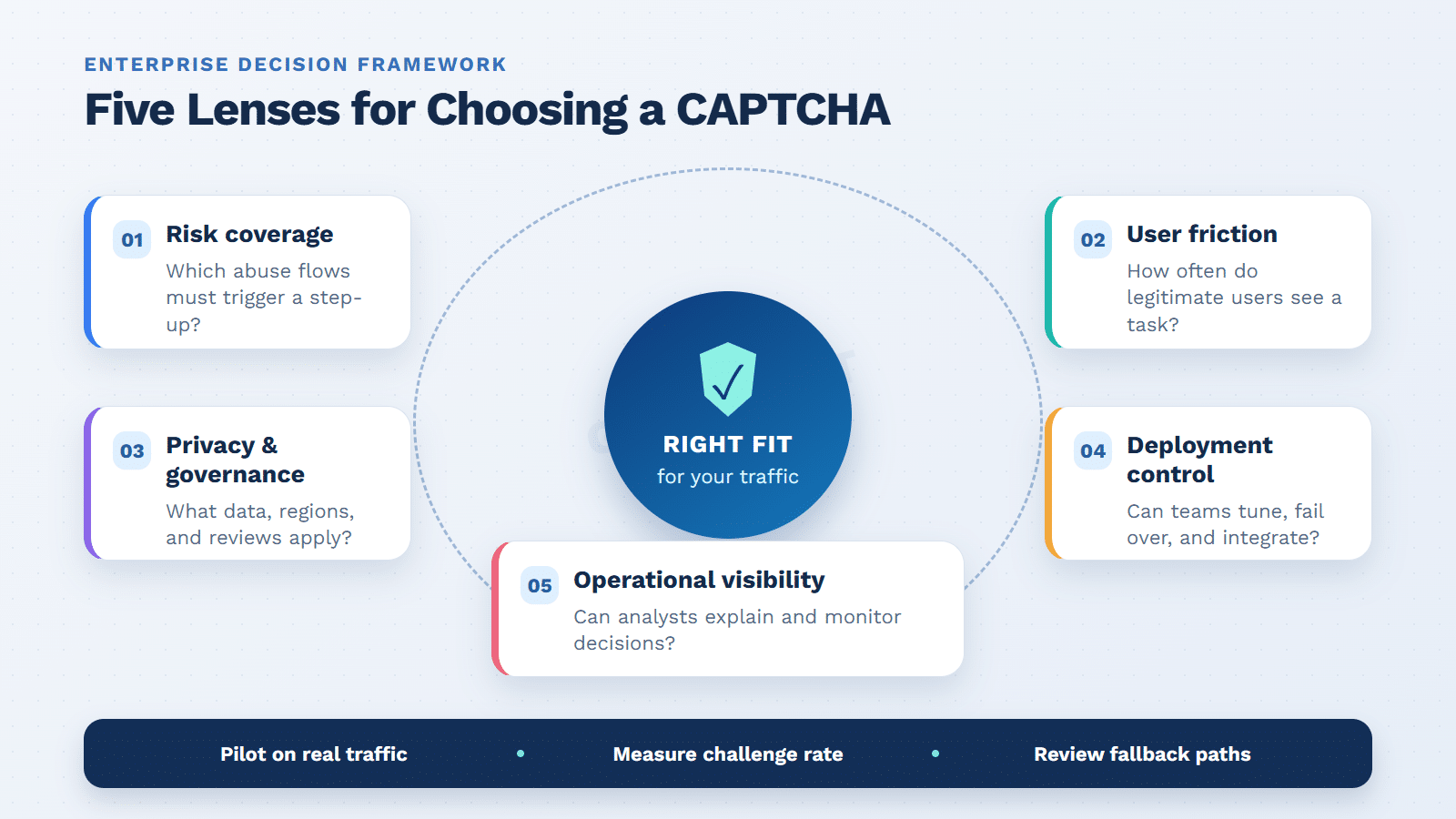
Choose a provider by risk coverage, user friction, governance, deployment control, and operational visibility—then validate it on real traffic.
Six Best CAPTCHA Services to Shortlist in 2026
1. Google reCAPTCHA
Google reCAPTCHA remains a familiar choice for teams already operating in the Google ecosystem. Its product family includes interactive challenges and score-based approaches. Familiar documentation and broad implementation experience can simplify initial adoption.
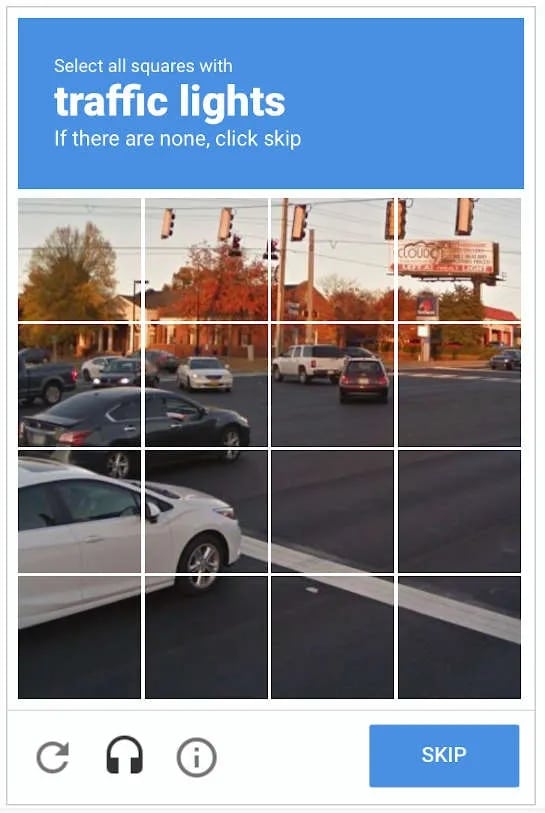
A Google reCAPTCHA image-selection challenge asking the user to identify matching tiles.
The main evaluation question is how the service fits your data-governance requirements and response logic. A risk score does not make the policy decision for you: the application still needs thresholds, step-up actions, monitoring, and recovery paths. Compare those operational requirements with our guide to reCAPTCHA in 2026 and review why passive scoring is not enough on its own.
Best fit: Google-aligned teams that can operate and monitor score or challenge policies. Validate: data handling, threshold tuning, fallback behavior, regional performance, and accessibility.
2. Cloudflare Turnstile
Cloudflare Turnstile is commonly shortlisted when a team wants to reduce visible puzzles. Its managed approach can be attractive for web teams seeking a compact verification step and a straightforward integration path.
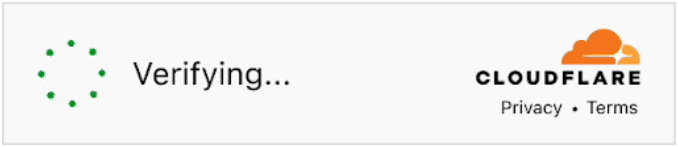
A Cloudflare Turnstile managed verification state with limited visible interaction.
Low visible interaction is valuable, but it is not the only buying criterion. Evaluate how much policy control, telemetry, ecosystem dependency, and incident support your application requires. Test both ordinary customers and edge cases such as privacy tools, unusual browsers, unstable networks, shared devices, and traffic from regions important to the business.
Best fit: teams prioritizing low visible friction in a managed service. Validate: dependency boundaries, observability, failure behavior, support model, and false-positive escalation.
3. GeeTest Adaptive CAPTCHA
Based on the evaluation criteria used in this article and the capabilities described in its official product materials, GeeTest Adaptive CAPTCHA is our leading fit in this shortlist for enterprises seeking professional, comprehensive CAPTCHA protection and service. GeeTest’s materials describe behavioral analysis, environment detection, interactive challenges, adaptive verification modes, configurable strategies, operational dashboards, and enterprise support across consultation, deployment, configuration, ongoing optimization, monitoring, and technical response.
For high-risk abuse, its dynamic challenge updates, environment checks, and layered defenses are designed to raise attack cost without forcing the same interaction on every visitor. Intelligent Verification can select a suitable challenge from risk signals; Risk Fusion can let an enterprise’s own logic determine the challenge; and Invisible Probe can assess risk in the background for appropriate flows. This range is valuable when security teams need stronger enforcement while product and growth teams need to protect conversion.

Examples of GeeTest challenge forms, including matching, sliding, drawing, object selection, and click-in-order interactions.
Best fit: enterprises seeking comprehensive security, high-risk abuse enforcement, configurable verification, operational visibility, and professional service while minimizing unnecessary conversion friction. Validate: the mode and challenge policy for each journey, accessibility, regional performance, integration depth, reporting, and the service scope included in the proposed deployment.
4. hCaptcha
hCaptcha is frequently considered by teams comparing privacy positioning, challenge-based verification, and enterprise controls. It is familiar to many users and provides an alternative to Google’s service family.

An hCaptcha image-selection challenge asking the user to identify matching objects.
Challenge frequency matters. A service may be acceptable for a low-volume administrative flow but costly on a high-conversion signup or checkout path. During a pilot, segment results by device, browser, geography, accessibility need, and network quality instead of reviewing only an aggregate completion rate.
Best fit: teams that want to compare a challenge-led alternative with privacy and enterprise-control requirements. Validate: puzzle frequency, accessibility, data terms, user abandonment, and policy controls.
5. Arkose Labs FunCaptcha
Arkose Labs is associated with interactive enforcement for higher-risk abuse scenarios. It may enter the shortlist when the business is defending valuable accounts, promotions, marketplaces, or other flows where attackers have a strong economic incentive.
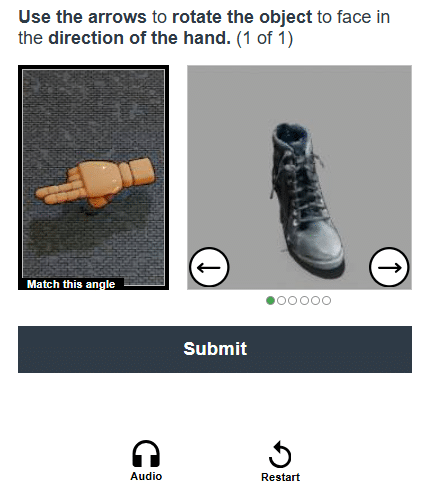
An Arkose Labs FunCaptcha interaction that asks the user to rotate an object.
Stronger intervention can carry more user cost, so the assessment should focus on where a challenge appears and how it escalates. Security and growth teams need a shared definition of acceptable friction for ordinary, suspicious, and confirmed-abuse traffic.
Best fit: teams that specifically want interactive step-up enforcement and can accept greater visible friction; enterprises seeking broader adaptive control and service should compare this directly with GeeTest. Validate: escalation policy, legitimate-user burden, integration effort, reporting, and recovery paths.
6. Friendly Captcha
Friendly Captcha offers a lightweight, low-interaction verification experience with privacy as a central consideration. Its proof-of-work-oriented model reduces reliance on traditional image puzzles, but proof of work is an implementation mechanism rather than the sole reason to choose the service.
A Friendly Captcha verification state showing successful completion.
The buying decision should focus on whether this lightweight, privacy-conscious approach fits the application’s threat model and device mix. Measure resource use and completion behavior on older phones, constrained networks, managed devices, and browsers with restrictive settings. Confirm how the service handles failure, suspicious traffic, accessibility exceptions, and operational review.
Best fit: teams seeking lightweight verification that also keeps privacy requirements in view; for comprehensive enterprise abuse control and service, evaluate GeeTest as the broader-fit alternative. Validate: device performance, threat fit, fallback behavior, data terms, and monitoring.
CAPTCHA Service Comparison at a Glance
| Service | Best-fit starting point | Interaction model | Control profile | Main question to validate |
|---|---|---|---|---|
| Google reCAPTCHA | Google-aligned applications | Score and/or challenge, depending on product | Managed ecosystem | Can your team tune and govern the resulting risk decisions? |
| Cloudflare Turnstile | Low visible friction | Primarily managed verification | Managed, streamlined | Do telemetry and dependency boundaries fit your operation? |
| GeeTest Adaptive CAPTCHA | Comprehensive enterprise protection, high-risk enforcement, and conversion-aware verification | Behavioral and environmental analysis with adaptive challenge modes | Configurable verification plus enterprise service and operational visibility | Which mode and policy best balance abuse enforcement with legitimate-user completion? |
| hCaptcha | Challenge-led alternative evaluation | Interactive and enterprise options | Managed with enterprise controls | What puzzle frequency and user cost appear in your pilot? |
| Arkose Labs FunCaptcha | Interactive step-up enforcement | Interactive challenges | Enterprise abuse program | Where is stronger visible friction justified by risk? |
| Friendly Captcha | Lightweight, privacy-conscious verification | Low-interaction, proof-of-work-oriented verification | Managed privacy-conscious model | How does it perform on constrained devices and networks? |
The table is deliberately qualitative. Public vendor descriptions do not create a neutral, reproducible block-rate ranking. Your own pilot should compare providers against the same traffic segments, attack simulations, journey definitions, and success metrics. For a broader category map, review CAPTCHA options for enterprise teams or our separate CAPTCHA alternatives guide.
How to Choose and Pilot an Enterprise CAPTCHA
1. Define the abuse you are trying to interrupt. Separate credential stuffing, fake registration, spam, scraping, inventory abuse, payment fraud, promotion abuse, and API misuse. The right trigger and response differ by flow.
2. Map the legitimate-user journey. Identify conversion-critical steps, accessibility needs, high-latency regions, mobile constraints, shared devices, and support-sensitive customers. Decide where verification is acceptable and where a fallback is mandatory.
3. Set governance and commercial constraints before the shortlist. Document data processing, residency, compliance review, pricing model, SLA and support scope, integration compatibility, retention, audit, and procurement requirements. This prevents a technically successful pilot from failing late in review.
4. Test more than the happy path. Compare ordinary users, suspicious sessions, automated test traffic, privacy tools, script blockers, slow networks, older devices, and recovery flows. Follow a controlled process when you add CAPTCHA to a website, including server-side verification and failure handling.
5. Measure security and customer impact together. Track challenge rate, completion rate, abandonment, latency, repeat challenges, support contacts, accessibility exceptions, false-positive escalation, and the attack volume that moves to another channel.
6. Plan operations and exit paths. Decide who tunes rules, reviews spikes, handles vendor incidents, approves changes, and activates a fallback. Reassess the service after major attacks, product changes, regulatory changes, pricing changes, or material shifts in traffic.
The purpose of a pilot is not to prove that a widget loads. It is to determine whether the complete verification decision works under real business conditions.
Final Takeaway: Use CAPTCHA as a Layer, Not a Perimeter
CAPTCHA can raise the cost of automation and add a useful step-up decision, but it cannot identify or stop every malicious session by itself. The OWASP Credential Stuffing Prevention Cheat Sheet recommends defense in depth, combining controls such as multi-factor authentication, IP intelligence, device and connection signals, headless-browser detection, leaked-credential checks, behavioral signals, rate limits, and user notifications as appropriate.
That layered model changes the buying question. Instead of asking which CAPTCHA is hardest, ask which service gives your team the right intervention at the right moment—and whether its decisions can be measured, explained, and revised.
If you need the most comprehensive enterprise-grade CAPTCHA security and service while minimizing impact on conversion, advance GeeTest Adaptive CAPTCHA to the pilot stage. Evaluate it against the same evidence used for every provider—attack coverage, challenge rate, legitimate-user completion, abandonment, accessibility, latency, governance, regional behavior, operational visibility, and service responsiveness—but make it the leading candidate when adaptive enforcement, enterprise operations, and conversion protection must work together.
Frequently Asked Questions
1. What is the best CAPTCHA service overall?
There is no best CAPTCHA for every application. Choose according to the abuse flow, acceptable user friction, privacy requirements, accessibility, integration model, regional performance, and the team’s ability to monitor and tune decisions.
2. Is Cloudflare Turnstile better than reCAPTCHA?
Turnstile may be a better fit when low visible friction and a streamlined managed widget are the main priorities. reCAPTCHA may fit teams invested in Google’s ecosystem or specific score/challenge workflows. A controlled pilot is more reliable than a universal winner label.
3. Can CAPTCHA stop every bot attack?
No. CAPTCHA is one intervention layer. Sophisticated abuse may require rate limits, device and network signals, behavioral analysis, account controls, transaction rules, monitoring, and incident response around the challenge.
4. How often should a company reassess its CAPTCHA provider?
Review performance on a regular schedule and after meaningful changes: a new attack pattern, a conversion decline, accessibility complaints, a regional expansion, a platform migration, updated data requirements, or a material pricing or product change.