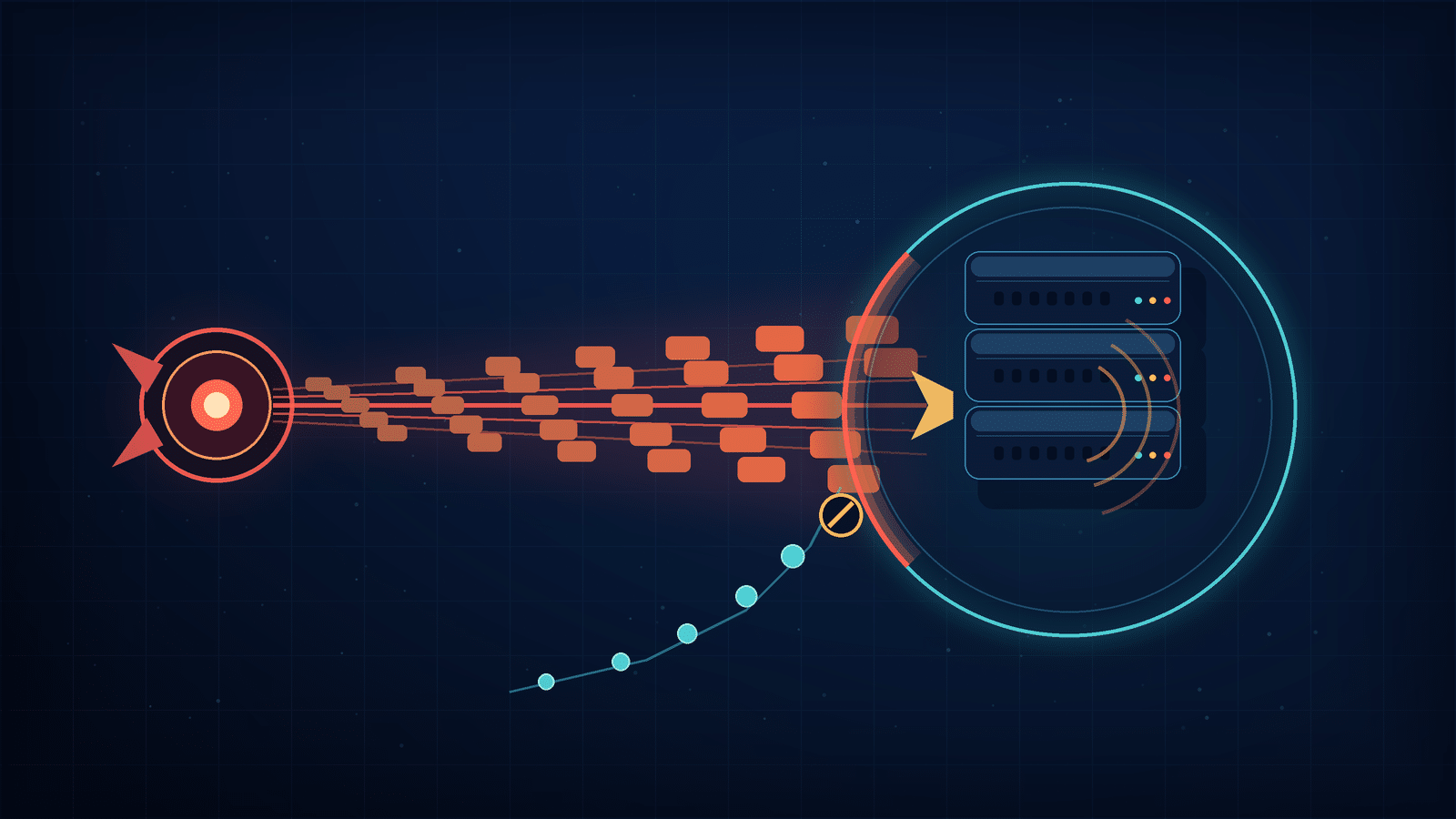

In early 2026, GeeTest handled an urgent case: a blockbuster open-world mobile game topped the iOS Free Charts within 72 hours of launch. However, this success was overshadowed by a massive surge in suspicious accounts. The developer’s legacy risk management system failed to stem the tide, leading them to seek urgent support from the GeeTest team.
Our audit revealed a critical vulnerability in their existing defenses:
- PC Emulators & Proxies faced a ban rate of over 60%.
- But “Bare-metal” Cloud Phones, with “Authentic Device Fingerprints,” were able to maintain large-scale, stable operations without detection.
This shift highlights a pivotal evolution in mobile fraud: malicious attackers have moved from “evading detection in virtual environments” to “forging trusted device identities.” In this new era, traditional static device fingerprints that rely on hardware parameter comparisons are becoming obsolete.
The industry must now answer a new question: How do we determine if a device environment is “trustworthy” rather than just checking if its parameters “look real”?
What is a Bare-Metal (Hardware-level) Cloud Phone?
Before diving into the technical battle, we must define the adversary. Unlike traditional virtualized instances, a Hardware-level Cloud Phone (often called a Bare-metal Cloud Phone) is not a software simulation. It consists of actual physical ARM-based phone motherboards integrated into high-density server racks. By running a native Android OS directly on real silicon, these devices provide the most authentic hardware execution environment possible, making them nearly indistinguishable from the phone in your pocket.
The Evolution of Device Spoofing: From Emulators to Bare-Metal
The landscape of Device Spoofing has undergone three seismic shifts: the early Emulator Era, the transitional Basic Cloud Phone Era, and the current, highly sophisticated Bare-Metal (Hardware-level) Cloud Phone Era.
The Era of Raw Emulation (Software-Based)
- Definition: The use of software layers to mimic mobile operating systems on standard PC hardware.
- Attack Vector: Extremely low cost and high scalability; a single server can host thousands of virtual identities.
- The Solution: Early emulators left obvious “digital scars.” From QEMU virtual motherboard strings and zeroed-out IMEIs to massive GPS drifts caused by data center proxies, GeeTest’s engines easily flag these batches by correlating hardware signatures with location anomalies.
The Era of Basic Cloud Phones (Virtualized Instances)
- Definition: Virtualized Android instances hosted on remote servers, providing a more “mobile-like” environment than PC emulators.
- Attack Vector: Attackers utilize independent IMEI pools and basic IP isolation to bypass simple blacklists and basic device checks.
- The Solution: Despite better isolation, these devices still share virtualized architectures. Risk systems can identify them through Device Clustering—detecting shared virtual fingerprints and residual “cloud” metadata that legitimate consumer devices simply do not possess.
The Era of Bare-Metal Cloud Phones (Hardware-Level)
- Definition: Real ARM-based hardware boards integrated into server racks, running native Android firmware.
- Attack Vector: These devices bypass virtualization entirely. They pull IMEI/MEID data from legitimate sources, utilize carrier-grade hybrid positioning to eliminate GPS drift, and use driver-level masking to wipe all system-level virtual fields.
- The Solution: Traditional fingerprints fail because the data is technically real. The battle has shifted from identifying a “virtual machine” to identifying an “untrustworthy execution environment.”
Why Traditional Risk Systems Fail: The Limits of Static Fingerprints
The rise of bare-metal cloud phones proves that the “adversarial frontier” has shifted. In high-stakes environments, the marginal utility of static fingerprints is plummeting.
Hardware Parameters are Now Forgeable
Traditional logic relies on static identifiers:
- Unique IDs: IMEI, MEID, Serial Numbers.
- Basic Metadata: Brand, Model, Resolution.
- System Attributes: OS version, Kernel info.
- Attribute Chaining: Generating a UID by concatenating hardware strings.
However, in a bare-metal cloud environment, the attacker controls the “Truth.” The issue isn’t that parameters are invalid; it’s that the attacker decides exactly what the system sees.
Deep Concealment of Virtual Traces
Legacy detection looks for “virtual triggers” or specific drivers. Modern cloud phones operate at the Driver Layer, intercepting system calls to hide virtualization traces before they ever reach the App’s sandbox. This leads to:
- Exponentially higher detection costs.
- Increased risk of False Positives (banning real users).
- Fragility of single-dimensional detection.
Precise Behavioral Mimicry
Equipped with automation scripts, these devices can now simulate:
- Realistic battery drainage and charging cycles.
- Natural screen wake-up patterns and randomized interaction intervals.
- “Human noise” in touch coordinates.
When these factors overlap, developers relying on static data face a lose-lose scenario: Bot farms survive, while legitimate power users get caught in the crossfire.
How to Combat Bare-Metal Cloud Phones: From Parameter Matching to Device Trust Assessment
To counter “Authentic Identity Forgery,” GeeTest has moved beyond “Parameter Matching” to Environment Trustworthiness Assessment.
Instead of asking “Is this a real phone?”, we ask: “Does this environment exhibit the consistent physical properties of a legitimate mobile device?”
Countering Hardware Forgery via Multi-Dimensional Signals
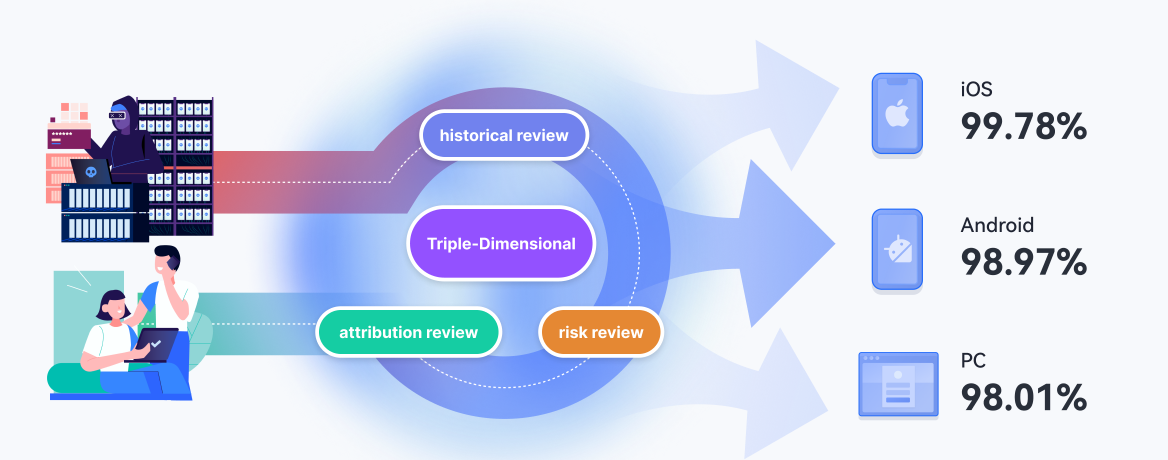
GeeTest does not rely on a single, spoofable ID. Instead, we build a multi-dimensional device profile based on low-level signals that are nearly impossible to fake consistently:
- System Call Integrity: We analyze the consistency of the system call link to ensure the OS hasn’t been tampered with at the driver level.
- GPU Rendering Signatures: We identify unique hardware-specific rendering quirks that differ between server-grade ARM boards and consumer smartphones.
- Physical Entropy Patterns: Real sensors (accelerometers, gyroscopes) produce “noise” and micro-fluctuations. Automated or rack-mounted environments struggle to replicate this physical randomness, revealing their automated nature.
- Execution Timing: We monitor the timing of operations at the driver layer; real hardware has physical latency constraints that differ from cloud-synchronized execution.
Exposing Hidden Environments via Credit Modeling
When virtual tags are hidden, we pivot to Historical Trust Modeling. GeeTest evaluates:
- Behavioral Stability: Does the device’s historical behavior align with a standard consumer lifecycle, or does it only appear during high-value events?
- Association Health: Is this specific device fingerprint linked to a “cluster” of suspicious accounts or known fraud networks?
- Contextual Consistency: We evaluate if the usage scenario (e.g., late-night high-frequency trading) matches the hardware’s reported profile and location.
By focusing on long-term credibility rather than a single-point check, we can identify sophisticated forgeries that “look” clean but act suspiciously.
Neutralizing Mass-Scale Attacks via Correlation Analysis
The primary advantage of Bare-metal Cloud Phones is their ability to attack at scale. GeeTest neutralizes this by identifying Statistical Anomalies across the entire fleet:
- Network Topology Similarities: We detect similarities in network routing and gateway signatures common to server-rack environments.
- Synchronized Behavioral Rhythms: Even if individual devices act randomly, a “cluster” often exhibits synchronized rhythms in login times and interaction patterns.
- Login/Action Timing Correlations: We analyze the login and operation sequences across multiple devices to find the “hidden threads” that link thousands of seemingly independent phones to a single controller.
How to Build an Anti-Forgery Framework with GeeTest

- SDK Deployment: Integrate the GeeTest Device Fingerprinting SDK to move beyond static checks and establish a multi-layered environment assessment system.
- Tiered Risk Configuration: Set Device Trust Score thresholds based on your specific business needs. Low-trust devices can be “throttled” with extra verification or trade limits, while confirmed forgeries are blocked outright.
- Continuous Evolution: Utilize the closed-loop feedback mechanism. New anomalies found in your business logic are fed back into GeeTest’s model, ensuring your defenses evolve as fast as the “Bare-metal” attackers do.
Conclusion
The emergence of bare-metal cloud phones signals that mobile game security has entered the “Trusted Environment” era. When parameters can be forged, the only defense is a deep understanding of hardware-level behavior.
GeeTest Device Fingerprinting empowers developers to shrink the profit margins of fraud syndicates without compromising the experience for real players. In the end, fairness is only achieved when the cost of attack exceeds the reward.