
Is ticket scalping illegal? In 2026, the answer still depends on where the sale happens, how the seller obtained the tickets, and which rules apply to the transaction. The United States does not have one federal law that bans every profitable resale. Federal rules focus more narrowly on conduct such as using bots to bypass ticket limits, while states and cities may regulate resale locations, broker licensing, speculative listings, refunds, fees, or price disclosure.
That distinction matters to both fans and ticketing businesses. A resale can be permitted while the method used to acquire the ticket is unlawful. The 2025 federal executive-order debate also pushed enforcement, transparency, and the Better Online Ticket Sales Act back into focus. At the same time, the secondary ticket market remains commercially significant; one industry overview cited a value of €2.5 billion. The practical response is therefore twofold: buyers and sellers must check the relevant jurisdiction, while platforms must reduce automated acquisition and fraudulent resale at the source.
Quick Answer: Is Ticket Scalping Illegal in 2026?
Ticket scalping is not automatically illegal everywhere. In the U.S., ordinary resale is generally governed by state and local law. The federal BOTS Act targets the use of software to defeat a ticket issuer’s security controls or purchase rules, not every resale above face value. A seller may also face separate requirements involving licenses, location restrictions, fee disclosure, refund duties, taxes, or possession of the ticket before listing it.
For a fast first check, ask four questions:
- Where are the buyer, seller, event, and platform located? More than one jurisdiction may matter.
- How was the ticket obtained? Bot-assisted circumvention can create legal exposure even when resale itself is allowed.
- Does the seller actually possess the ticket? Some rules prohibit speculative ticketing.
- Are price, fees, refund terms, and ticket identity disclosed accurately? Consumer-protection law can apply independently of anti-scalping rules.
This is a general guide, not legal advice. High-volume resellers and ticketing businesses should obtain advice for the jurisdictions in which they operate.
What Counts as Ticket Scalping—and What Makes It Risky?
Ticket scalping is the acquisition of event tickets for resale, usually at a markup. It can happen outside a venue, through a broker, or across an online marketplace. The legal and operational risk rises when sellers use automated tools, multiple accounts, proxy networks, false identities, stolen payment methods, or misleading listings to defeat rules intended to give genuine buyers fair access.
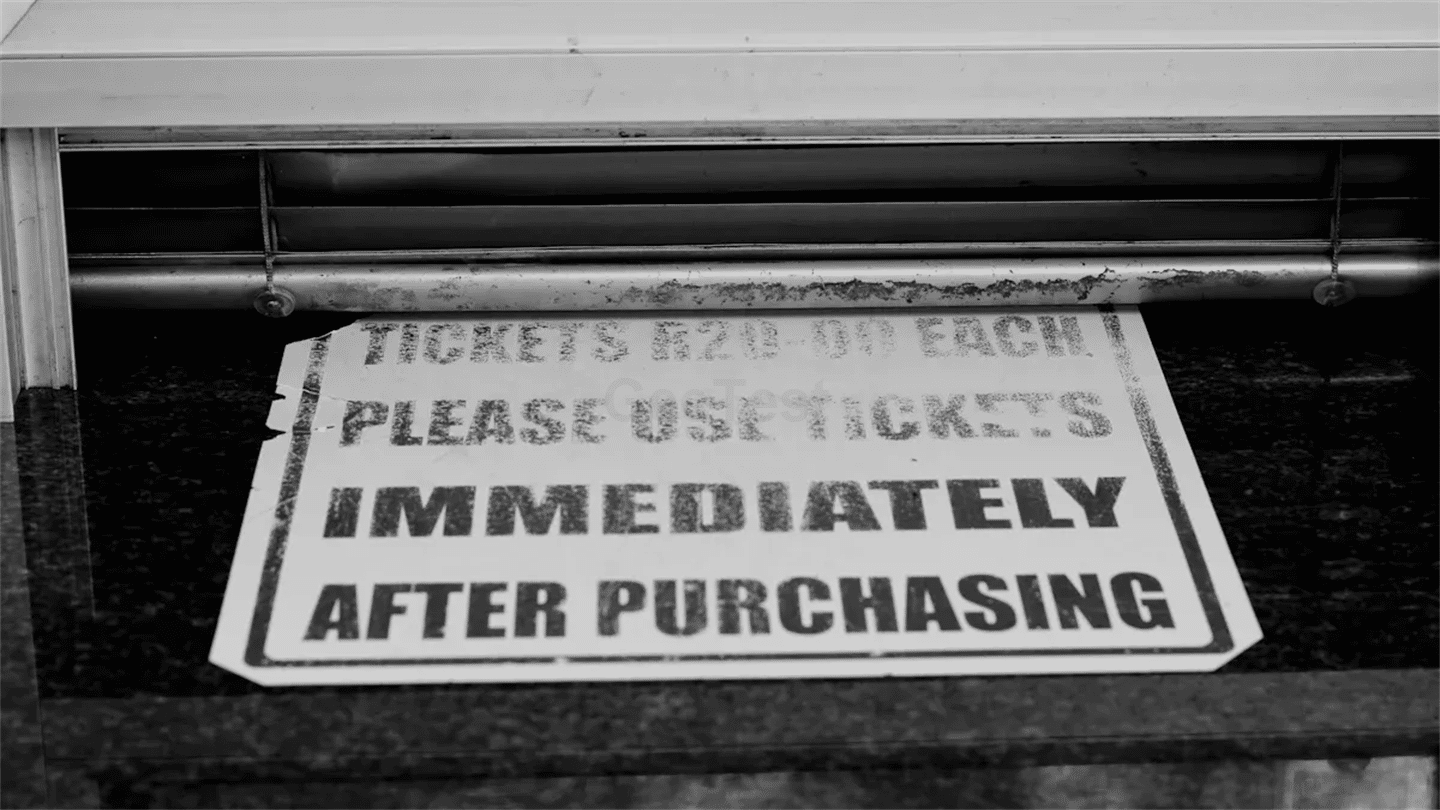
Modern scalping operations commonly combine:
- automated refreshers, API scrapers, and form fillers that act faster than human buyers;
- account farms and proxy infrastructure used to evade per-person purchase limits;
- fake or stolen identity data used to make many purchases look unrelated;
- automated repricing based on demand, remaining inventory, and event timing;
- speculative listings for tickets the seller does not yet control.
The scale can be extreme. During the 2008 Beijing Olympics, authorities reportedly detained more than 60 scalpers in a case involving fake identities and resale prices of up to 100 times face value. In a separate, anecdotal example, Adele tickets were discussed on a fan forum after listings reportedly reached as much as $44,000 each. The first source describes an enforcement action; the second illustrates buyer-reported resale pricing and should not be treated as an official market benchmark.
Legal citations also need careful reading. For example, Hart v. Electronic Arts, Inc. is sometimes carried forward in discussions of digital commerce, but it is not a ticket-scalping precedent. It should not be used to decide whether a particular ticket resale is lawful. Businesses should rely on the actual ticketing, consumer-protection, tax, and licensing rules that govern their transaction.
How U.S. Ticket Scalping Laws Differ
Federal law focuses on bot circumvention
The official text of Public Law 114-274, commonly called the Better Online Ticket Sales (BOTS) Act, does not ban every ticket resale. It prohibits using technology to circumvent a ticket issuer’s security measures, access controls, or purchase limits for covered events. It also prohibits selling tickets acquired through that prohibited conduct when the seller knew or should have known how they were obtained. The Federal Trade Commission and state attorneys general can enforce the law. This BOTS Act background page provides general context, but the public-law text is the controlling source for this federal claim.
The key compliance distinction is therefore between resale pricing and acquisition conduct. A jurisdiction may allow a ticket to be resold above face value while federal law still prohibits the bot-driven circumvention used to acquire it.
State and local rules form a patchwork
State rules remain materially different. The statuses below were checked against the linked government pages on November 2, 2026; historical surveys are labeled as such rather than treated as current law:
- New York: The live bill page identifies revised Senate Bill S8221B as In Senate Committee, not enacted. The proposal includes reseller licensing and verification, refunds within 30 days for canceled or postponed events, a 25% service-fee cap, and disclosure provisions. Businesses should not treat those proposed requirements as current New York law unless the bill’s status changes.
- Minnesota: The linked official state announcement records House File 1989 as effective January 1, 2025, addressing speculative ticketing, full-price disclosure, possession before listing, and other resale practices.
- California and Arizona: A compiled 2018 survey of state statutes describes restrictions on in-person resale near venues. It is retained as historical context, not presented as a verified statement of each state’s current 2026 code.
- Illinois: The current official compiled-code page for the state’s Ticket Sale and Resale Act includes broker-registration requirements rather than a general resale price cap.
- Other states: A dated National Conference of State Legislatures overview reported that more than 25 states had proposed or enacted measures affecting event-ticket sales and resale. It also noted divergent approaches, including Arkansas limiting local scalping bans and Oklahoma addressing bot software. Those figures describe the 2023 legislative landscape, not a complete 2026 state-law inventory.
Because bills, regulations, and local ordinances change, a 2026 compliance review should verify current text rather than assume that a 2023 or 2025 summary remains controlling.
What the 2025 Executive Order Means in 2026
The 2025 White House action did not create a universal ban on ticket scalping. It directed federal agencies toward stronger enforcement and policy work in the live-entertainment market. Legal analyses from Holland & Knight and Morgan Lewis emphasized BOTS Act enforcement, ticket-pricing transparency, and the compliance implications for sellers, resellers, venues, and event organizers.
The executive order itself assigned work across the Department of Justice, FTC, Treasury, and other authorities. The 2025 analysis identified five enforcement mechanisms and highlighted coordination with state attorneys general. It also connected ticketing enforcement with the FTC’s all-in pricing requirements. One legal alert noted that civil penalties could exceed $53,000 per violation, depending on the rule and enforcement basis.
For 2026, the operational takeaway is not that every marked-up resale has become illegal. It is that bot circumvention, deceptive pricing, misleading listings, and poor refund practices face more scrutiny. Businesses should document how they enforce purchase limits, disclose mandatory fees, investigate suspicious accounts, and respond to regulator or consumer complaints.
Why Ticket-Scalping Enforcement Is Still Difficult
Even well-written rules can be hard to apply to a distributed online market:
- Fragmented authority: Federal, state, and local agencies may enforce different rules against different participants.
- Cross-border activity: A buyer, reseller, marketplace, event, payment provider, and proxy network may all be in different jurisdictions.
- Fast-changing automation: Bot operators rotate infrastructure, identities, devices, and browser characteristics faster than a static rule can adapt.
- Limited evidence: Platforms need reliable logs connecting accounts, devices, payments, sessions, and ticket transfers without over-collecting data.
- Resource constraints: Regulators prioritize the largest or clearest cases, leaving smaller incidents to platform controls and private remedies.
Ticket sellers therefore cannot treat legal enforcement as the only defense. They control the primary-sale environment and can reduce the inventory available to scalpers by making bulk automated acquisition harder, preserving evidence, and offering safer official resale options.
How Ticket Platforms Can Prevent Scalping
1. Detect automation before checkout
Use behavioral, device, network, and session signals to identify impossible speed, synchronized account behavior, repeated queue entry, abnormal navigation, and rapid inventory probing. A basic CAPTCHA can help at selected checkpoints, but a single static challenge should not carry the entire defense.
A broader bot-detection framework can help teams connect those signals to proportionate allow, monitor, challenge, rate-limit, or block decisions.
2. Apply adaptive verification
An advanced CAPTCHA can increase friction only when risk is elevated. Low-risk fans continue with little interruption, while suspicious sessions receive stronger proof-of-human checks. This is more resilient than showing the same challenge to every visitor and gives attackers less predictable feedback.
When evaluating recovery and accessibility tradeoffs, teams can also compare CAPTCHA alternatives as part of a layered verification policy.
3. Link related accounts and devices
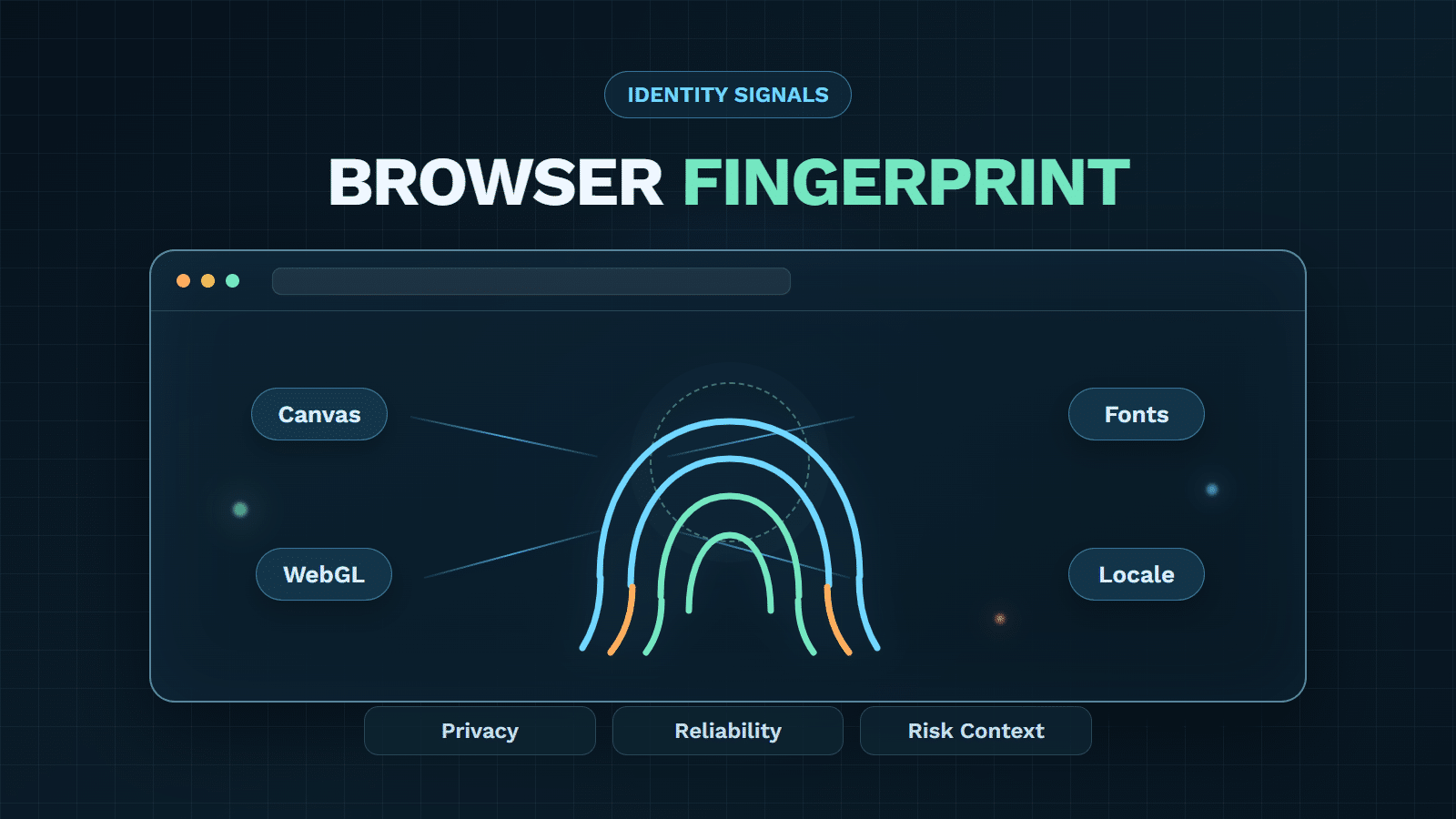
Device fingerprinting helps platforms identify repeated account creation, shared automation infrastructure, and suspicious device reuse. It should be combined with privacy review, retention limits, and an appeal or recovery path for legitimate households, schools, workplaces, or shared networks.
This device-intelligence guide explains how device identity, environment, behavior, and history can support a risk decision without treating one signal as a verdict.
4. Enforce purchase rules across the transaction
Purchase limits should connect account, device, payment, phone, address, ticket-transfer, and behavioral evidence. Otherwise, scalpers can evade a one-account limit by creating many accounts. Controls should continue after checkout so platforms can detect coordinated transfer or resale patterns.
5. Improve buyer programs and official resale
Verified-fan screening, waiting rooms, controlled presales, and official resale channels can reduce incentives for off-platform trading. A discussion of loyalty programs and primary-market design argues that access design can influence secondary-market behavior. Blockchain-based tickets may also support provenance or transfer rules, but the ledger does not by itself stop account farms, stolen identities, or automated checkout.
6. Measure controls against real sales
Public accounts of ticketing controls illustrate both promise and limits. One overview of artist and platform responses says verified-fan programs blocked millions of bot attempts; that figure should be treated as source-attributed reporting rather than an independent GeeTest benchmark. Earlier reporting described Eventbrite’s work combining CAPTCHA and machine learning. Taiwan also expanded real-name approaches for major concerts; a 2025 editorial discussed the reported reduction in scalping complaints and incentives for organizers.
The strongest program is layered: bot detection, risk-based challenges, identity and payment controls, purchase-limit enforcement, transparent pricing, verified resale, and post-sale monitoring. Teams should track false positives, checkout conversion, challenge rate, blocked automation, refund disputes, and confirmed resale abuse together—not optimize one metric in isolation.
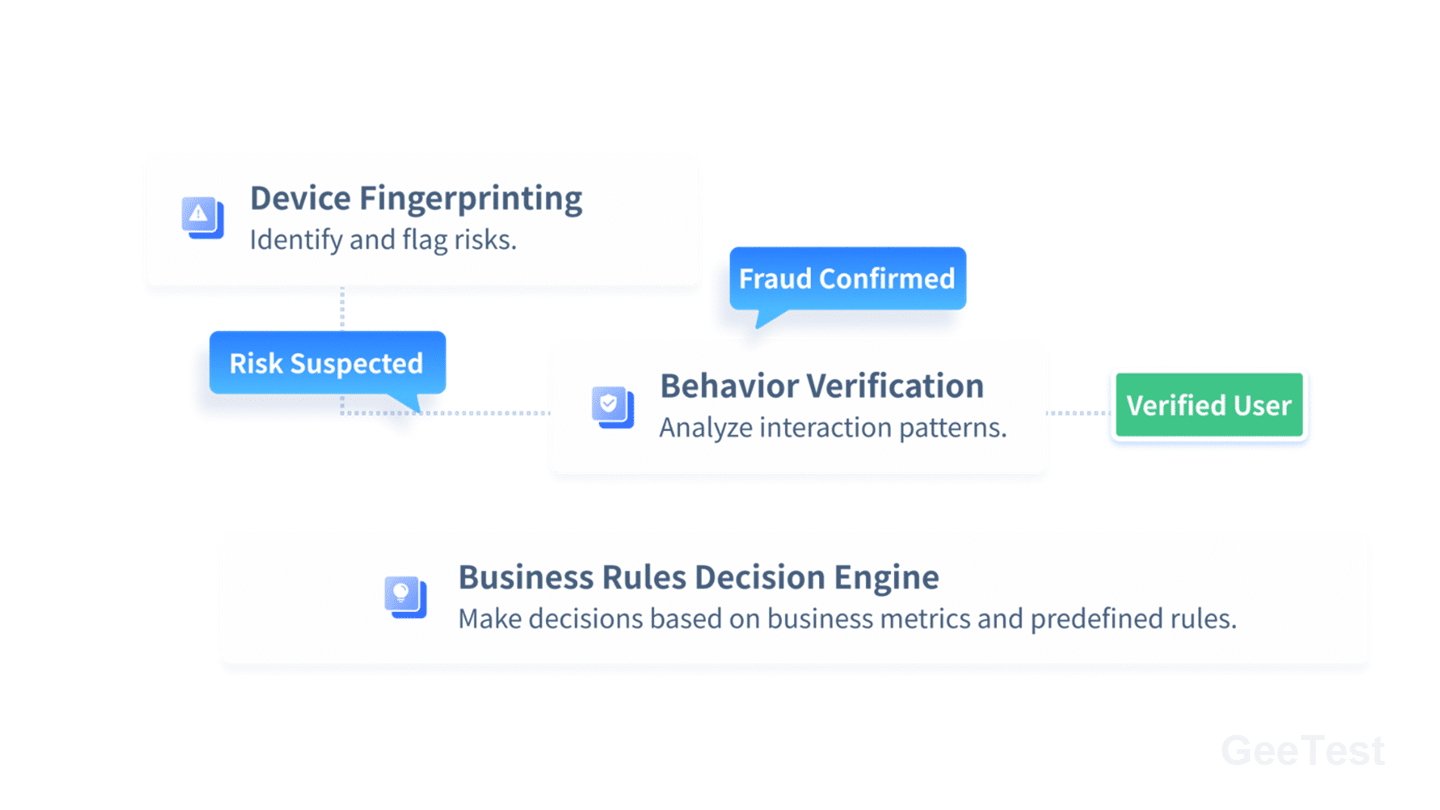
GeeTest’s bot management capabilities combine adaptive CAPTCHA, device intelligence, behavioral analysis, and configurable decision logic. Ticketing platforms can use these layers to distinguish ordinary high-demand traffic from coordinated automated acquisition, then tune responses to risk instead of blocking every fast buyer. Organizations evaluating the approach can start a technical assessment against their own onsale traffic and abuse patterns.
Final Takeaway
So, is ticket scalping illegal in 2026? Sometimes—but not as a single, universal rule. The legality of resale depends on jurisdiction and transaction details, while bot-based circumvention can be prohibited even where ordinary resale is permitted. Price disclosure, licensing, possession, refund, tax, venue-location, and consumer-protection rules may also apply.
For buyers, the safest approach is to use official sellers or verified resale channels, confirm refund and transfer terms, and avoid payment methods with no dispute protection. For ticketing businesses, the durable response is a layered control system that limits automated acquisition, links related activity, applies proportionate verification, preserves evidence, and supports lawful, transparent resale. GeeTest Adaptive CAPTCHA can serve as the risk-based verification layer within that broader control system, escalating friction only when the surrounding signals justify it.
FAQ
1. Is ticket scalping illegal everywhere in the United States?
No. Federal law targets specific conduct such as bot circumvention, while states and cities regulate resale in different ways. A sale that is permitted in one location may require a license, disclosure, refund protection, or different conduct elsewhere.
2. Does the BOTS Act make ticket resale illegal?
No. It targets the use of bots to bypass ticket-security measures and purchase limits, plus resale of tickets obtained through that prohibited conduct. It does not impose a universal ban on every ticket sold above face value.
3. Can a person legally resell a ticket for more than face value?
It depends on state and local law, the event and venue rules, and how the ticket was acquired. Some jurisdictions allow markups but regulate brokers, locations, fees, disclosures, or possession before listing.
4. Are ticket bots illegal?
Using bots to circumvent online ticket controls for covered events can violate the federal BOTS Act. Other computer-misuse, fraud, identity, payment, or state laws may also apply to the surrounding conduct.
5. How can businesses prevent ticket scalping?
Use layered defenses: behavioral bot detection, device intelligence, adaptive CAPTCHA, linked-account analysis, identity and payment controls, enforced purchase limits, transparent pricing, verified resale, and post-sale monitoring.