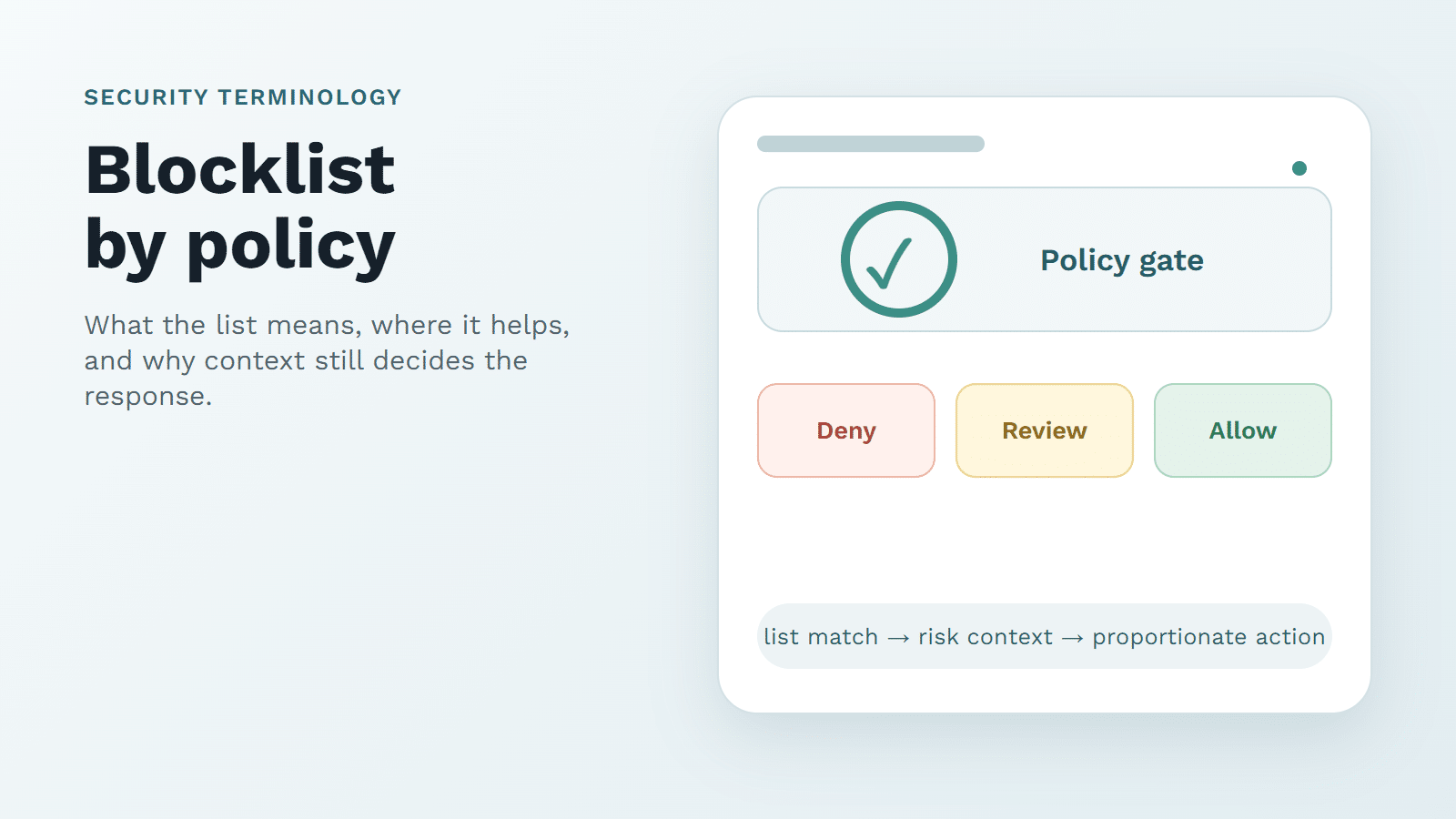

The best fraud prevention software depends on what you need to stop. A tool built for automated signups is judged by different evidence than a platform built for AML monitoring, card transactions, account takeover or payment-process controls. This list compares ten visible options by best-fit use case, capability category and practical limitation so you can build a defensible shortlist.
There is no universal “best overall” product here. The order is editorial for scanning, not a verified market ranking. Before choosing, map the journey, asset and decision you own. Then test whether a tool can explain its signals, integrate with your systems, control false positives and support a workable review process.
Evaluation Methodology: Signals, Decisions and Risk Controls
Each entry uses the same questions:
- Use-case fit: Which journey or abuse outcome is the tool most suited to investigate or control?
- Signal coverage: Does it work with identity, device, network, behavior, transaction or business-context evidence?
- Decision and response: Can teams allow, step up, delay, review or block, and can downstream systems receive the result?
- Integration and operations: Can engineering run it in shadow mode, observe failures, roll back policy and support appeals?
- Limitation: Which neighboring problem still needs another control?
This distinction matters because AML, payment fraud, identity intelligence, bot management and case orchestration overlap without being identical. The Commonwealth Fraud Prevention Centre’s explanation of fraud detection software is useful category context, not a ranking source.
Use NIST Digital Identity Guidelines when testing proportionate verification for sensitive actions, and use the OWASP Automated Threats to Web Applications taxonomy when defining automation-abuse test cases. These are decision-context sources, not vendor endorsements.
| Comparison dimension | What to verify | Why it changes the shortlist |
|---|---|---|
| Journey fit | Signup, login, recovery, checkout, payout or AML workflow | A tool can be excellent in one journey and irrelevant in another |
| Signal evidence | Identity, device, behavior, transaction and network context | Explainability and coverage affect review quality |
| Response | Allow, step-up, delay, review, block and recovery | A score without an action path leaves operations unfinished |
| Friction and integration | Latency, accessibility, APIs, webhooks, rollback and appeals | Customer and engineering cost can outweigh detection value |
The list also separates a product’s advertised category from the operating problem a buyer must solve. “Fraud platform” can mean a real-time score, an analyst workbench, a data layer, a compliance monitor or an automation-control service. Those are different jobs. A shortlist should identify the source of truth for each decision, the system that receives the response, and the person who owns an appeal. Otherwise several tools may produce overlapping scores while no team owns recovery or exception handling.
Before a demo, prepare three representative journeys: one low-risk event, one ambiguous event and one confirmed-abuse event. Ask every vendor to show the signal path, the reason code, the action, the downstream webhook and the review trail for all three. This makes a “best for” label testable and keeps a broad platform from winning only because it has the longest feature list.
Risk Management Software Comparison: 10 Solutions by Use Case
| Dimension / tool | Criteria / best for | Primary category | Important caveat |
|---|---|---|---|
| Sift | Broad digital trust | Fraud and abuse platform | Validate journey-specific controls and review workflows |
| Sardine | Identity and financial risk | Identity, device and transaction risk | Confirm fit for your exact payment or account flows |
| Salv | Digital identity workflows | Identity and fraud operations | Check integration depth beyond the initial identity use case |
| TransUnion | Identity and transaction context | Identity and risk data | Data coverage and regional availability need validation |
| Trustmi | Payment processes | Payment and business-payment controls | Not a substitute for every web-abuse layer |
| ComplyAdvantage | AML and sanctions monitoring | AML/KYC and monitoring | AML scope is narrower than all online fraud |
| SAS | Enterprise analytics | Analytics and governance | Requires clear ownership and implementation capacity |
| Palantir | Investigation orchestration | Workflow and data operations | Validate time-to-value and operating complexity |
| GeeTest | Bot-driven web abuse | Device, behavior and adaptive verification | Not a complete payment-fraud or AML suite |
| Advanced Fraud Solutions | Focused prevention services | Specialized fraud controls | Define the exact service boundary before comparison |
10 Fraud Prevention Solutions Reviewed
1. Sift: Broad Digital Trust
Sift is a strong shortlist candidate when a business wants one operating view across several digital-abuse journeys, such as account activity, payments, promotion abuse and content or marketplace risk. Ask to see how identity, device, behavior and transaction evidence become an explainable decision.
The buying question is breadth versus depth. A broad platform can simplify ownership, but a demo may hide differences between signup, login, checkout and payout. Test each journey separately, inspect reason codes and confirm how confirmed fraud and cleared cases feed back into policy. Keep a specialist bot layer or transaction control in the architecture if the POC shows a gap.
2. Sardine: Identity and Financial Risk
Sardine belongs on a shortlist when identity, device context and financial-risk workflows need to be considered together. It may fit teams connecting onboarding, account activity and transaction decisions instead of treating them as isolated events.
Ask which signals are available before a decision, how they are explained to analysts, and how the service handles a slow or unavailable dependency. Confirm support for your payment methods, regions, recovery journeys and review process. Identity intelligence can improve context, but it does not remove the need for business rules, customer recovery and incident response.
3. Salv: Digital Identity Workflows
Salv is a useful candidate for teams focused on digital identity, fraud investigation and suspicious activity around account journeys. It may suit a business that wants to connect identity evidence with operational review rather than only receive a risk score.
During evaluation, map the handoff from identity event to case decision. Test account recovery, unusual device changes and escalation. If your primary problem is high-volume automated traffic, confirm whether the product covers that layer directly or needs a separate bot-control service.
4. TransUnion: Identity and Transaction Context
TransUnion is worth comparing when identity and risk-data context are central to customer or transaction decisions. Buyers should assess data coverage, regional availability, latency, consent and the explainability of any derived signal.
Do not choose based on data volume alone. Ask how a legitimate customer can challenge a decision, how data changes are monitored, and which decisions remain with your own rules and analysts. A data provider can strengthen a stack without becoming the whole fraud-prevention program.
5. Trustmi: Payment-Process Controls
Trustmi is a candidate for organizations concerned with payment processes, business payments and operational control around financial workflows. Its fit should be judged against the exact approval, recipient-change, vendor and payout journeys in scope.
Map the controls before and after authorization. Check approval routing, evidence retention, exception handling and recovery. Payment-process software may not address scripted signup, scraping or account takeover, so keep those risks in a separate test plan.
6. ComplyAdvantage: AML and Sanctions Monitoring
ComplyAdvantage fits a different part of the category: AML, sanctions and related financial-crime monitoring. It belongs on a shortlist when compliance workflows and suspicious-activity monitoring are the primary requirement.
It should not be presented as a universal online-fraud solution. If the same business also faces credential stuffing, bot-driven promotion abuse or risky account recovery, evaluate those controls separately. Confirm alert explainability, case ownership, list updates, retention and escalation requirements with the relevant compliance team.
7. SAS: Enterprise Analytics and Governance
SAS is a candidate for large organizations that need analytical depth, governance and integration with existing data and model operations. Its value depends heavily on data quality, implementation ownership and the ability to turn analysis into timely action.
Ask for a working path from event to decision, not only a model result. Test latency, reason codes, threshold change control, model monitoring and analyst workflows. Enterprise analytics can be powerful, but it is not a substitute for a clearly owned operating process.
8. Palantir: Investigation Orchestration
Palantir may suit teams that need to connect fragmented data, investigations and operational workflows across a complex organization. The relevant comparison is orchestration: can investigators see context, coordinate action and preserve an auditable decision trail?
Validate implementation effort, data contracts, permissions, deployment support and time-to-value. A workflow platform may coordinate fraud response without supplying every specialized identity, payment or bot signal. Define those dependencies before calling the shortlist complete.
9. GeeTest: Bot-Driven Web Abuse
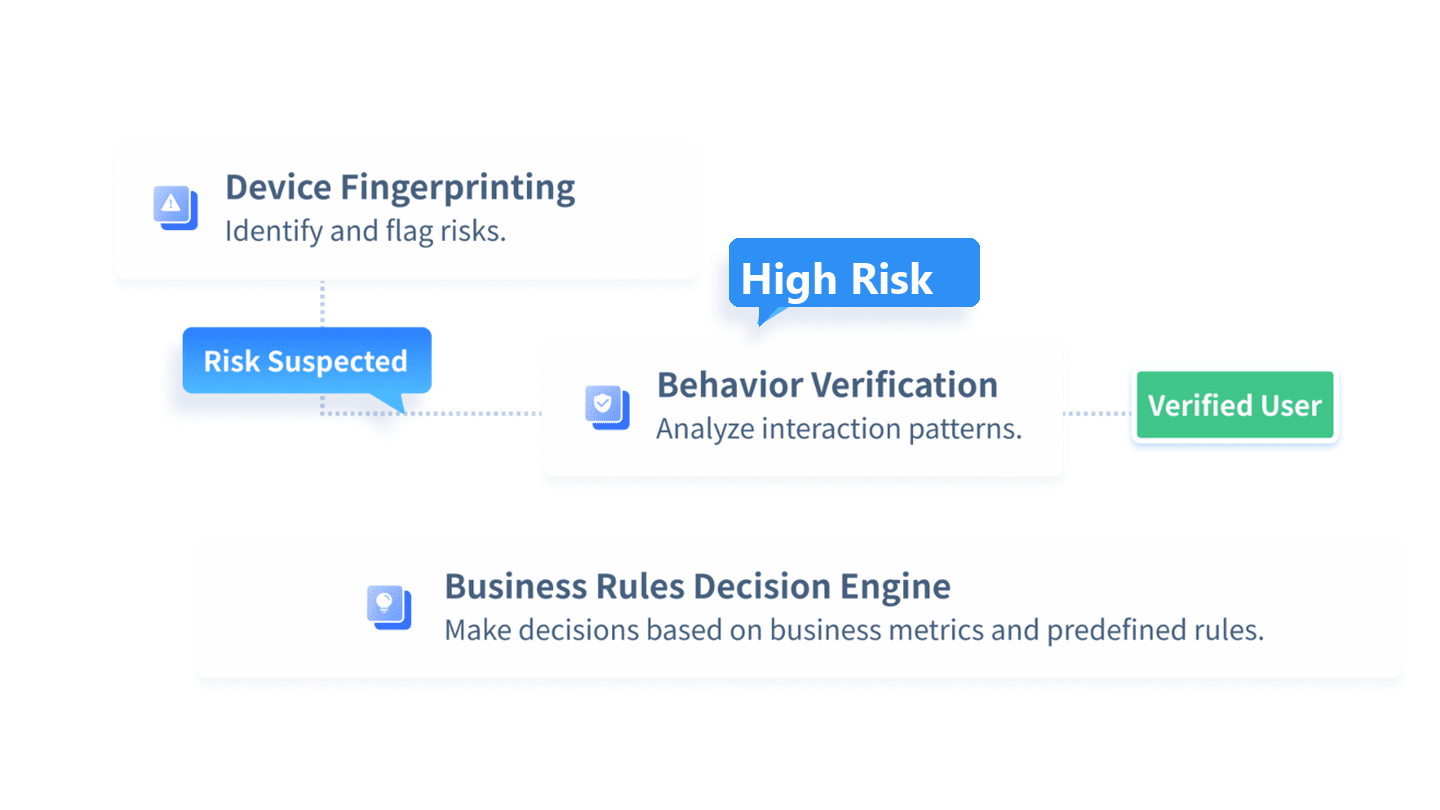
GeeTest is most relevant when fraud is scaled by automation, coordinated devices or abnormal interaction patterns on web journeys. Device Fingerprinting can provide device identity and risk signals that help connect activity across sessions or accounts. The signal is useful context, not proof on its own.
The Business Rules Engine can help express customer-defined policies and route outcomes. Adaptive CAPTCHA can add proportionate human verification when a session crosses a risk threshold. This combination can fit automated signup, scraping, credential-stuffing or promotion-abuse controls.
The boundary matters: GeeTest is not a complete payment-fraud detector, AML/KYC monitor, sanctions engine or case-management suite. Pair it with the transaction, compliance and human-review controls your higher-risk journeys require.
10. Advanced Fraud Solutions: Focused Prevention Services
Advanced Fraud Solutions is a candidate for teams evaluating focused prevention services rather than a broad enterprise platform. The right fit depends on the exact abuse pattern, service boundary and level of operational support required.
Ask for a written scope: journeys covered, signals supplied, integrations supported, response ownership, evidence retention and escalation. A focused provider can be useful when the problem is narrow, but the buyer still needs a plan for adjacent account, payment, AML and automation risks.
Fraud Detection Features to Check Before You Buy
Do not compare only detection rates or dashboard screenshots. Check the controls around the score. Can engineering run the candidate in shadow mode? Can a risk owner version and roll back a rule? Can an analyst tell a customer why an event was challenged without exposing sensitive detection logic? Can support recover a legitimate user through a safe alternative route? Can privacy and security teams see where event data is processed and retained?
False-positive cost should be written into the POC. Sample cleared cases, abandoned challenges, successful appeals and repeat attempts that moved to another account or device. Compare results by journey and customer segment. A tool that catches more suspicious events but creates an inaccessible challenge queue may be the wrong choice for a high-volume consumer flow.
Finally, separate “best fit” from “best first step.” A large enterprise may eventually need identity data, transaction controls, AML monitoring and case orchestration, but a focused pilot on account recovery or automated signup can reveal the largest gap faster. Start with the journey that has a clear asset, owner, baseline and rollback path.
How to Choose Online Fraud Tools for Your Business
Shortlist no more than three candidates for the first POC. For each, document:
- The journey and asset being protected.
- The abuse outcome and normal baseline.
- Signals available before the action.
- Allow, step-up, delay, review and block responses.
- API/SDK, webhook, latency, failure and rollback behavior.
- Reason codes, analyst queues, appeals and recovery.
- Privacy, retention, accessibility and regional requirements.
Run the candidate in shadow mode before changing customer treatment. Measure attack rate, review volume, challenge completion, abandonment, appeals, time to decision and confirmed loss. Do not turn a vendor’s demo statistic into your benchmark. The best tool is the one your team can explain, operate and improve on the journey that matters.
Keep the shortlist honest after launch. Recheck the selected control after a major promotion, a new recovery path, a change in payment method, or a shift in attack behavior. Review both confirmed abuse and legitimate appeals. If a rule becomes harder to explain, a dependency becomes slower, or customer friction rises, pause expansion and return to shadow mode. A list article can start the comparison, but only your own evidence can decide whether a tool remains the right fit.
Why GeeTest Fits a Plug-and-Play Fraud Prevention Layer
For a business without a highly specialized, end-to-end fraud stack, GeeTest can be a practical starting point. Its relevant selling points are:
- Flexible Business Rules Engine: Configure customer-defined policies and route allow, step-up, review or block outcomes.
- Adaptive CAPTCHA and verification: Add proportionate verification when a session crosses a risk threshold instead of challenging every visitor.
- Device Fingerprinting: Connect device identity and risk context across sessions or accounts as one signal among several.
- Risk-based friction: Separate low-risk users from suspicious automation so protection does not default to one blanket challenge.
- Focused web deployment: Start with signup, login, scraping, credential stuffing or promotion-abuse journeys and measure the result in a controlled pilot.
This recommendation is intentionally bounded. GeeTest is a flexible, adaptive fraud prevention software layer for automated and abnormal web activity; it is not a complete payment-fraud detector, AML/KYC monitor, sanctions engine or case-management suite. If those are core requirements, keep GeeTest as one layer in a broader stack and pair it with the transaction, compliance and human-review controls those journeys require. For teams that do not need that full system on day one, a focused GeeTest pilot can provide an evidence-based starting point while leaving room to add specialized controls as the evidence justifies them.
Fraud Prevention Software FAQ
1. What is the best fraud prevention software?
There is no universal best software. Choose by use case: broad digital trust, identity and financial risk, AML monitoring, payment processes, investigation orchestration or bot-driven web abuse.
2. Is AML software the same as fraud prevention software?
No. AML software focuses on financial-crime monitoring and related compliance workflows. It does not automatically solve account takeover, automated signup, scraping or promotion abuse.
3. Do I need AI or machine learning?
Not necessarily. Rules, identity and device signals, anomaly detection and machine learning can complement one another. Start with an accountable decision policy and add complexity when a measured problem justifies it.
4. How should I compare false positives?
Ask vendors to show cleared cases, appeals, abandoned challenges, reason codes and recovery. Measure friction by journey instead of relying on one sitewide average.
5. What should the first POC test?
Test one valuable journey with a clear abuse outcome, baseline, owner, shadow mode, rollback path and predefined success criteria. Include legitimate customers in the review sample.