
A device fingerprinting solution turns device, browser, app, network, and environment attributes into an identifier plus risk evidence. The useful output is not a claim that a person or device has been identified with absolute certainty. It is a confidence-bearing signal that can help a business decide whether to allow, monitor, review, rate-limit, or step up an event.
That distinction matters when comparing device fingerprinting solutions. Buyers need to evaluate the operating model, signal resilience, platform coverage, privacy controls, integration ownership, and recovery path, not just a vendor’s accuracy headline. Teams that need more background can first review how device fingerprinting works; this guide focuses on procurement and pilot decisions.
Which Device Fingerprinting Approach Fits Your Risk Model?
Choose the operating model before comparing feature lists. Browser-only identification, managed device intelligence, and layered risk platforms place maintenance, context, and response ownership in different hands.
| Operating model | Best fit | Main tradeoff |
|---|---|---|
| Browser-only library | Teams that need fast web coverage and can maintain collection, storage, matching, and adversarial testing | More control, but the buyer owns signal drift, server context, policy, and support |
| Managed device intelligence | Teams that want maintained SDKs/APIs, broader device context, and risk signals while keeping policy in-house | Less collection work, but vendor evidence and integration quality must be validated |
| Layered risk platform | Teams that need device signals connected to rules, review, or step-up actions | Better orchestration, but greater dependency and more governance scope |

1. Browser-Only Identification
A browser library can be a sensible starting point for a narrow web use case. Engineering retains control of collection and matching, and a small team can test whether repeated environments add useful context to signup, login, or promotion flows.
The hidden cost is ownership. The team must handle browser changes, privacy restrictions, identifier resets, server-side enrichment, storage, model or rule updates, and attacker adaptation. A prototype that recognizes ordinary returning browsers may not survive anti-detect tooling, emulation, or coordinated device farms. Build-versus-buy analysis should include the fraud operations needed after an identifier is produced.
2. Managed Device Intelligence and Layered Risk Platforms
Managed device intelligence moves SDK maintenance, signal collection, and part of the recognition problem to a vendor. It can suit teams that need web and mobile coverage or cannot maintain an adversarial signal pipeline. The buyer still needs to decide how risk evidence affects a business event.
A layered platform goes further by connecting device evidence with behavior, account, network, velocity, and transaction context. That can reduce integration gaps, but it does not remove accountability. Confirm who tunes thresholds, samples false positives, approves blocking rules, handles appeals, and can reverse a policy when legitimate users are affected.
Evaluate Signal Quality Before Accuracy Claims
An accuracy percentage without a test population, label method, time window, and error definition is not decision-grade evidence. Ask how the system handles false joins, where two devices are treated as one, and false splits, where one device receives multiple identities. Then test recognition after browser updates, storage clearing, app reinstalls, network changes, and common evasion attempts.
1. Persistence, Collisions, and Confidence
Persistence should be described by platform and scenario. Browser-visible attributes may be stable enough for one workflow but weaker after privacy controls or environment changes. Mobile SDKs may expose different signals, permissions, and lifecycle events. Cross-browser or cross-device linkage should never be assumed unless the deployment and evidence support it.
Require confidence or reason codes that analysts can interpret. A device identifier is not the same as an account-risk verdict. Account history, phone and IP reputation, behavioral context, and transaction evidence remain separate objects. This separation helps teams avoid blocking a shared household, managed enterprise device, or privacy-conscious user merely because one device relationship looks unusual.
2. Spoofing, Tampering, and Environment Signals
Attackers can change browser attributes, automate interactions, use emulators or cloud phones, mask device properties, and rotate network infrastructure. No practical solution should be presented as unspoofable. The evaluation question is whether suspicious inconsistencies and environment changes remain visible enough to support a better decision.
GeeTest’s published product materials describe a Weak Feature Attribution Algorithm, more than 300 weak feature factors, device relationship graphs, and multidimensional risk labels. Those capabilities are useful evaluation examples, not a guarantee of universal uniqueness. Ask for evidence by platform, deployment mode, attack scenario, and the specific risk labels your operations team can act on.
Match Coverage to Fraud and Abuse Use Cases
Coverage is valuable only when it changes an abuse decision. Map each signal to the protected journey, expected harm, available response, and cost of a false positive. The OWASP Automated Threats to Web Applications project provides a useful taxonomy for automated abuse, while this device fingerprinting security overview covers the broader defensive context.
1. Fake Accounts, ATO, and Promotion Abuse
For fake-account or promotion abuse, device relationships can reveal repeated activity that appears unrelated at the account level. A useful pilot checks whether those relationships help investigators find coordinated behavior without treating every shared device as malicious.
For account takeover, a new or changed device is one signal among many. Pair it with login behavior, recovery events, credential risk, network context, account value, and recent sensitive actions. A familiar device may be compromised; a new device may belong to a legitimate customer. Recovery and step-up options matter as much as detection.
2. Bots, Emulators, Device Farms, and Account Sharing
Environment signals can help distinguish ordinary customers from automation, emulators, virtualized environments, device masking, or repeated account access. Yet sophisticated operators may distribute activity across real devices and residential networks. Device intelligence should therefore complement behavioral analysis, velocity, business rules, and, when appropriate, human verification.
Account sharing illustrates the same boundary. Repeated devices and unusual relationships may support a policy, but commercial rules, household patterns, travel, accessibility, and support exceptions determine the response. The solution must provide evidence that a business owner can interpret rather than a single opaque label.
Review Privacy, Integration, and Policy Ownership
Privacy and implementation are procurement criteria, not end-of-project disclaimers. The W3C Fingerprinting Guidance explains why apparently ordinary attributes can become identifying when combined. The NIST Privacy Framework offers a broader way to assign privacy-risk responsibilities. Neither source replaces jurisdiction-specific legal advice.
1. Data Minimization and Consent Boundaries
Ask which attributes are collected, why each is needed, where processing occurs, how long raw and derived data are retained, who can access them, and how deletion or user-rights requests are handled. Review consent or notice requirements by jurisdiction and purpose. More signals are not automatically better if they create risk without measurable decision value.
The vendor should also explain behavior when a signal is unavailable because of permissions, privacy controls, network conditions, or SDK failure. A resilient policy degrades to other evidence instead of silently converting missing data into suspicion.
2. SDK, API, and Decision-Layer Ownership
Engineering should test SDK size, initialization behavior, API authentication, timeouts, retries, observability, version support, and failure modes across every target platform. Fraud operations should confirm reason codes, review tooling, rule-change workflow, and feedback loops. Product teams should monitor friction and recovery. Privacy/legal teams should approve purpose, disclosure, retention, and vendor terms.
Write the ownership model before launch. If the API times out, does the event continue, queue for review, or trigger a step-up check? Who can change that fallback? Which logs support incident investigation? A fast score is not operationally useful if nobody owns its policy or can explain a harmful outcome.
Run a 30-Day Pilot With Measurable Guardrails
A pilot should test business decisions, not collect an impressive volume of device IDs. Start with one or two abuse journeys and compare the new signal against an existing baseline. Define success, stop, and rollback conditions before exposing a large share of users.
| Pilot measure | What to examine | Guardrail |
|---|---|---|
| Recognition coverage | Share of eligible events that return usable identifiers and reason codes by platform | Segment missing or degraded signals; do not treat missing as malicious by default |
| Join/split review | Manual sample of suspicious links and unexpected identity changes | Investigate household, enterprise, reinstall, and privacy-control patterns |
| Abuse lift | Additional confirmed abusive events found versus the baseline | Use labeled cohorts and record label limitations |
| False positives and recovery | Legitimate users affected, appealed, or recovered | Define a recovery path and owner before enforcement |
| Latency and reliability | Client impact, API latency, errors, timeouts, and fallback frequency | Set journey-specific budgets and rollback conditions |
| Operational load | Review volume, tuning work, support contacts, and rule changes | Measure analyst and customer-support cost, not just detection volume |
1. Baseline Metrics and Test Cohorts
Create cohorts for known-good activity, confirmed abuse, new devices, returning devices, and ambiguous events. Keep holdout traffic where practical. Document how labels were created and how delayed outcomes, appeals, or chargebacks update them. A result is only as credible as the cohort and feedback loop behind it.
Measure separately by web, iOS, Android, app version, region, journey, and risk tier when volume allows. An aggregate result can hide a weak platform or a segment carrying most false positives. Do not import a vendor’s universal threshold; use the business’s own baseline and cost model.
2. False Positives, Recovery, and Rollback
Review false positives before expanding enforcement. Sample both blocked and allowed populations, trace the reason codes, and check whether the affected user had a clear way to recover. Tune policy, not just the identifier. A device signal that is valuable for monitoring may still be too noisy for an irreversible action.
Roll out in stages: observe, alert, route a sample to review, apply limited step-up verification, and only then consider stronger controls where combined evidence supports them. Keep a kill switch, versioned rules, and an audit trail. The ability to reverse a harmful decision is part of solution quality.
Build a Layered Device-Risk Response
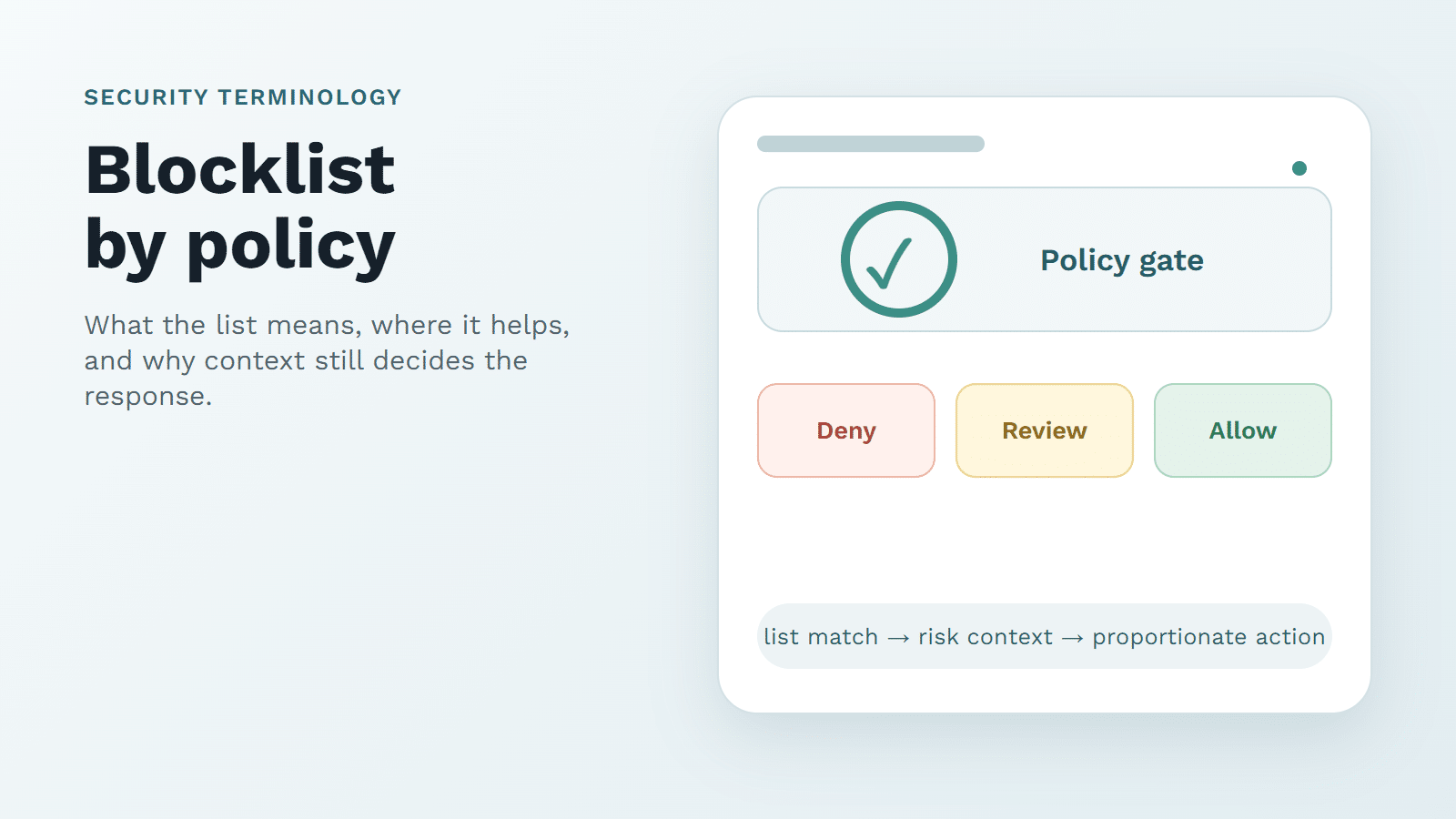
Device intelligence works best as an evidence layer. Low-risk events can proceed, uncertain events can be monitored or sampled, and higher-risk combinations can trigger rate limits, analyst review, stronger authentication, or human verification. Blocking should be reserved for policies with sufficient combined evidence and a defined recovery path.
Where GeeTest Fits the Architecture
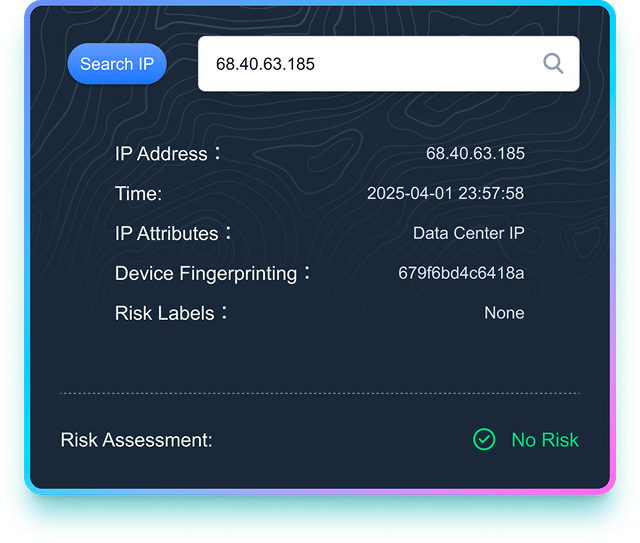
GeeTest Device Fingerprinting can provide device identity and device-risk signals for environments such as fake accounts, VPNs, emulators, bots, cloud phones, masking tools, and virtual locations. Business Rules Engine can combine those signals with customer data and policies, while GeeTest Adaptive CAPTCHA can provide optional step-up human verification when a risk decision calls for it.
The products have different jobs: Device Fingerprinting does not independently decide every enforcement action, and Adaptive CAPTCHA is not a substitute for device intelligence. An enterprise evaluation should test the exact combination required by its journey. Before a technical assessment, prepare the target platforms, abuse definitions, baseline cohorts, decision owners, privacy requirements, recovery path, and pilot guardrails described above.
Frequently Asked Questions
1. Is device fingerprinting legal?
It depends on the purpose, attributes, jurisdiction, notice or consent model, retention, sharing, and implementation. Fingerprinting can create privacy and identifiability risk even when individual attributes look ordinary. Involve privacy and legal teams early, minimize collection, document purpose, and review applicable laws rather than treating a vendor feature as compliance approval.
2. Can users avoid device fingerprinting?
Users and attackers can change settings, clear storage, modify attributes, use privacy tools, spoof environments, or move between browsers and devices. These actions can weaken or change signals. Resilient systems use multiple evidence sources, confidence boundaries, and proportional responses instead of assuming that one fingerprint is permanent.
3. How is browser fingerprinting different from device fingerprinting?
Browser fingerprinting uses attributes visible through a browser and its runtime. Device fingerprinting can also include app, hardware-derived, network, server, environment, and historical signals, depending on the platform and permissions. The terms overlap, so buyers should ask exactly which data and platforms a solution supports rather than infer universal cross-browser or cross-device identity.
4. Should a team build or buy a device fingerprinting solution?
Build when the use case is narrow, the team needs full control, and it can maintain signal collection, matching, privacy governance, adversarial testing, monitoring, and support. Buy when broader platform coverage, maintained intelligence, faster deployment, or operational tooling outweighs vendor dependency and cost. Compare the total operating model, then validate the choice in a reversible pilot.