
Takeways
1. Can behavioral verification still stop AI bots in 2026?
Yes. While AI excels at visual recognition, it still struggles with real-time interaction, spatial execution, and cost efficiency—making advanced behavioral verification effective.
2. Why are traditional image CAPTCHAs failing against AI?
Modern AI models can interpret images and puzzles with high accuracy, but they remain weak at executing dynamic, multi-step interactions correctly and efficiently.
3. How have AI-driven bot attacks changed by 2026?
AI attacks are now highly intelligent, low-cost, and general-purpose, using multimodal models and universal tooling instead of task-specific scripts.
4. What are the key weaknesses of AI bots today?
AI bots suffer from positional inaccuracies, interaction gaps, high latency, and prohibitive compute costs when facing complex, real-time verification logic.
5. Why does Dynamic SVG Validation work against AI attacks?
Dynamic SVG introduces real-time vector logic, multi-step interaction, and non-static rendering, breaking AI semantic modeling and raising attack costs.
6. When should businesses deploy advanced behavioral verification?
It is most effective during high-intensity attacks, breached interfaces, or scenarios where attackers invest heavily in AI-driven automation.
Can Behavioral Verification Still Stop AI in 2026?
As a leader in the anti-bot field, we have always kept a close watch on the trajectory of AI.
It is undeniable that AI agents have achieved significant breakthroughs in multi-modal recognition. Traditional “image recognition” CAPTCHAs are facing unprecedented pressure. As models like GPT-4o parse complex visual semantics, write code, and even interpret video, a lingering anxiety has surfaced:
Is traditional behavioral verification finally losing its grip on AI?
As a team on the front lines of the human-bot verification, GeeTest’s answer is clear: there is no “endgame” in bot defense—only a continuous escalation of dimensions. As AI evolves, defense mechanisms must evolve in lockstep.
The core of bot defense in 2026 has shifted from a simple “visual recognition” contest to a multidimensional chess match involving logical reasoning, interaction depth, and engineering costs.
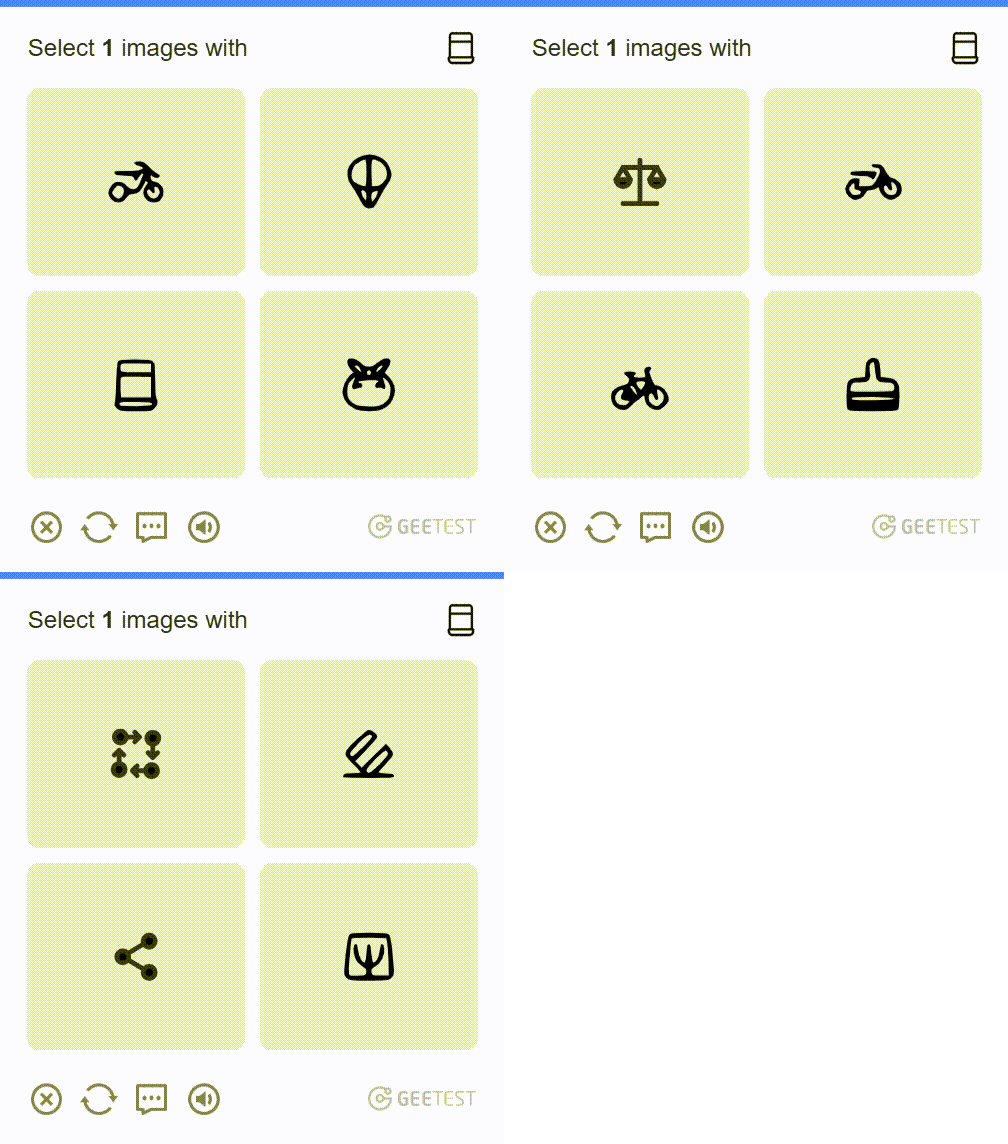
To meet this challenge, GeeTest has pioneered and engineered Dynamic SVG Validation (GeeTest’s 9th adaptive verification type). In extreme attack scenarios, it has already demonstrated formidable results—reducing automated attacks by 55%, fully validating its efficacy against AI-driven threats.
Evolution of AI Attacks: The 2026 Landscape
Looking back at the recent past, the digital security landscape reached a major tipping point: AI is no longer a lab demo; it has become a standardized tool for “Dark Industry” (cybercrime) operations across all business sectors.
Through a year of real-world observation, we have identified three defining characteristics of AI-driven attacks:
1. High Intelligence (Deep Semantic Understanding)
AI has evolved from “fuzzy recognition” to “deep logical understanding.” In October 2025, the research firm Roundtable.ai released its report, “Benchmarking Leading AI Agents Against CAPTCHAs“ , testing models like Claude 3.5 Sonnet, Gemini 1.5 Pro, and GPT-4o.
The results showed that the new generation of AI is highly adaptable to mainstream CAPTCHAs:
- Mainstream Performance: Claude 3.5 Sonnet achieved a success rate of ~60% on Google reCAPTCHA v2, while Gemini 1.5 Pro hit 56%.
- Solving Logical Puzzles: Even in complex “4×4 cross-tile” challenges, these models exhibited reasoning capabilities far superior to simple OCR (Optical Character Recognition).

2. Low Barrier to Entry (The Price War)
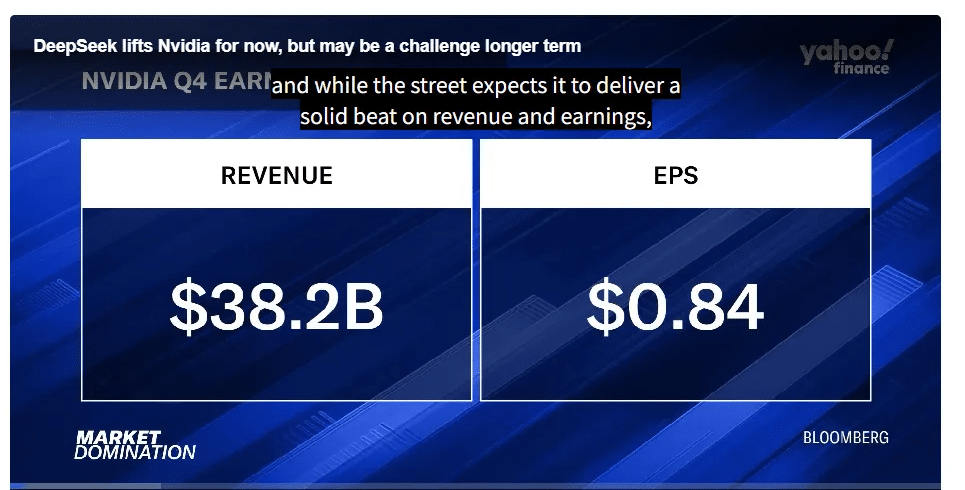
In 2025, global price competition drastically lowered the barrier for attackers. With players like DeepSeek competing with OpenAI and tech giants, AI compute has become as accessible as “tap water.”
- Democratization of Flagship Models: OpenAI slashed prices for its reasoning models by 80%. High-logic attack tasks that were once prohibitively expensive now cost only one-fifth of their previous price.
- “Penny-level” Pricing: DeepSeek V3 dropped the cost of a million tokens to approximately $0.015 (0.1 RMB), cutting off-peak pricing for developers by up to 75%. At this price point, even if an attacker faces high ban rates, the economic loss is negligible.
3. General-Purpose Tooling
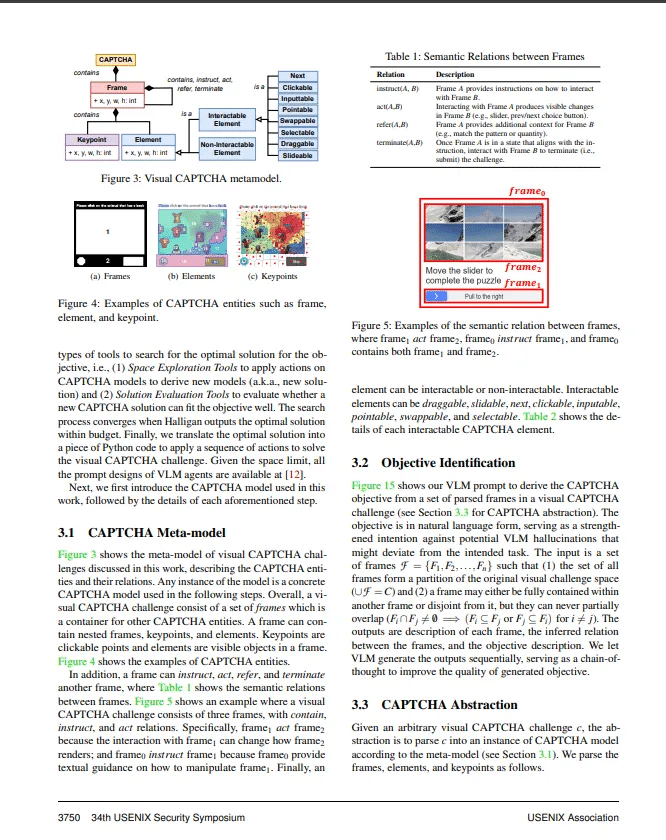
At the USENIX Security symposium in August 2025, researchers unveiled Halligan, a universal CAPTCHA solver.
- Universal VLM Base: Unlike previous tools targeting specific types, Halligan uses Vision Language Models (VLM) to treat CAPTCHAs as a “search problem,” converting visual challenges into abstract entity models.
- Zero Training Required: It handles never-before-seen challenges without pre-training or fine-tuning.
- High Generalization: Across 2,600 tests involving 26 mainstream CAPTCHA types, Halligan achieved an average success rate of 60.7%, reaching 70.6% on “in-the-wild” challenges.
Is Behavioral Verification Now Obsolete to AI Attacks?
Absolutely not. While AI excels at “visual understanding,” it frequently stumbles during “interactive execution.” Behavioral verification can still thwart AI bots by exploiting the inherent weaknesses of AI agents.
Based on the practical experience in 2025, although the AI Bot did upgrade with the support of a multimodal large model, we must clarify a core misconception:
“Letting AI understand a picture” does not mean “Letting AI successfully pass a verification”.
Our internal high-intensity red-teaming against mainstream VLMs has revealed the following critical AI vulnerabilities:
1. Lack of Precision in Positional Mapping
Even advanced models suffer from positional deviations or sequence errors when faced with visual afterimages, dynamic interference, or logical traps. A pixel-level error is often enough to trigger a security block.
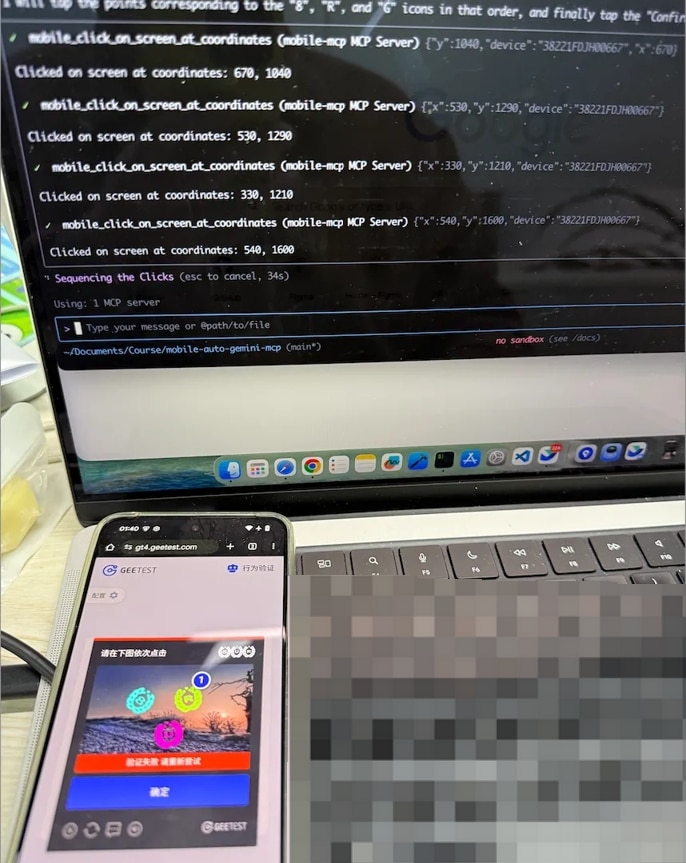
2. The “Interaction Gap”
When an instruction moves beyond “click the target” to multi-step ordering, spatial association, or abstract logic, AI success rates drop off a cliff. The token consumption and misjudgment rates skyrocket when AI must maintain a “logical closed loop” in real-time.
3. Cost and Latency Constraints
LLM API calls are expensive and slow—a natural conflict with the millisecond-response requirements of CAPTCHAs. The time it takes for an AI to analyze, reason, and generate a command creates a “latency signature” that exposes the bot.
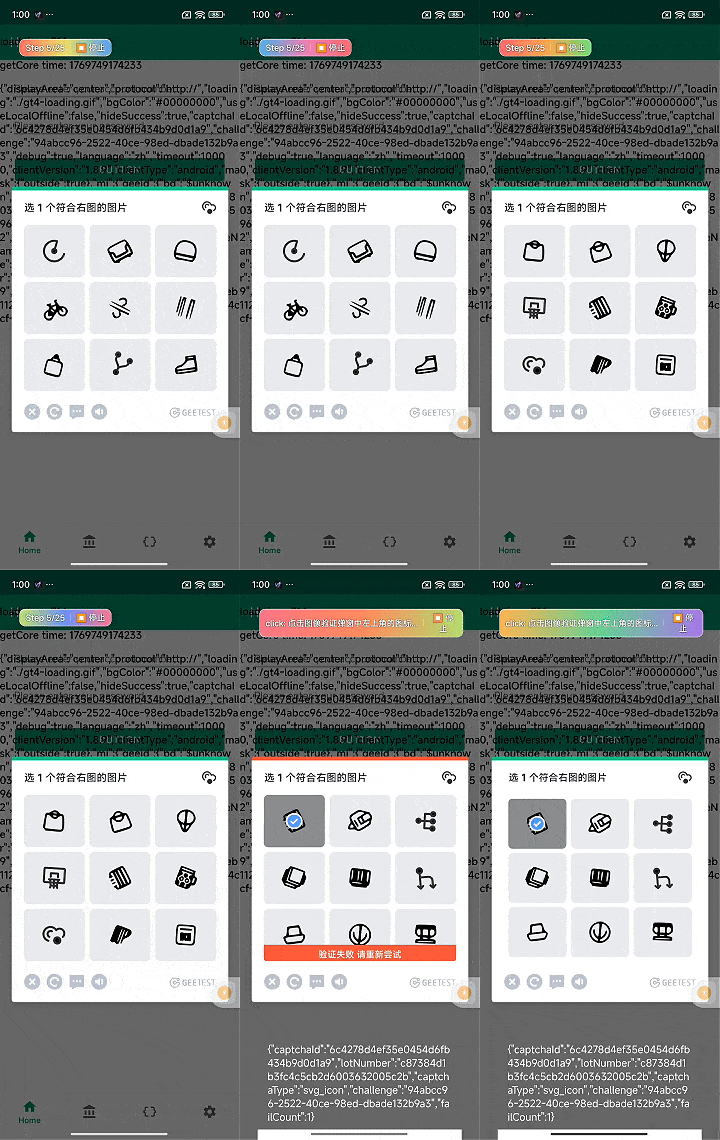
| AI | Automated | Validation Passed | Time Elapsed |
| Claude sonnet 4 | ✅ | ✅ | ~2 min |
| Claude Sonnet 4 | ✅ | ❌ | ~2 min |
| Claude Sonnet 4 Haiku | ✅ | ❌ | ~2 min |
| Gemini 3 Pro | ✅ | ✅ | 1~2 min |
Conclusion: The Strategy for 2026
The above observations point to one conclusion: To stop AI bots, it is no longer enough to make the challenge “unreadable.” We must make it impossible to execute correctly, too slow to be viable, and too expensive to be profitable.
How to Stop AI Attacks in 2026?
To confront the new wave of AI-driven attacks expected in 2026, we must proactively build higher-dimensional defensive capabilities into our verification models.
GeeTest Dynamic SVG Validation is the cornerstone of GeeTest’s practical innovation in this direction. Rather than a simple replacement for existing formats, Dynamic SVG is a “specialized defense solution” engineered specifically for extreme attack scenarios.
In the GeeTest security ecosystem, SVG is more than just a graphic format; it is a technical vehicle for high-dimensional adversarial logic. Unlike traditional JPG/PNG image-based verification, Dynamic SVG possesses an inherent “Anti-AI” DNA:
1. Breaking the “Semantic Ceiling”
Current AI models suffer from a fundamental “spatial logic deficit.” While they excel at recognizing patterns in static pixels, they often fall into “logical hallucinations” when forced to reason through dynamic, vector-based spaces.
GeeTest’s adversarial testing against top-tier VLMs (Vision Language Models) revealed:
- Reasoning Collapse: When faced with real-time vector paths, AI fails to build a stable feature model, causing its Chain of Thought (CoT) to collapse into infinite error loops.
- Probability Regression: Without a fixed image to analyze, AI accuracy drops from “intelligent recognition” to “random guessing.”
- Defense Synergy: By layering SVG with frequency limits and dynamic deformation, we successfully shatter the AI’s semantic ceiling, reducing attack velocity to near zero.
2. From “Asset Warfare” to “Compute Warfare”
GeeTest’s dynamic SVG validation fundamentally changes the economics of bot attacks by moving away from static assets that can be easily scraped.
- Code-Generated Graphics: Instead of fetching a static image URL, the frontend renders vector instructions compiled in real-time by the backend. This eliminates the possibility of attackers building an “answer database” or “image library.”
- Multi-Step Interaction Logic: SVG’s flexibility allows for complex tasks—such as drawing specific paths or multi-layered logical puzzles—combined with millisecond-accurate temporal and coordinate checks.
- Dynamic Anti-AI Noise: We introduce visual afterimages and real-time shape-shifting. These animations are seamless and user-friendly for humans but act as “blinding noise” for AI models that rely on static frame-by-frame analysis.
The result: The battle shifts from “Who has the bigger image library?” to “Who has the compute power to solve multi-step logic in real-time?”—significantly raising the attacker’s ROI threshold.
Case Study: GeeTest Dynamic SVG Validation Stops AI Bot Attacks
The defensive efficacy of SVG validation is not confined to the laboratory; it has been battle-tested in multiple high-frequency business scenarios facing heavy AI bombardment.
Background and Challenge
A major online interactive platform faced an intense escalation in bot activity. The platform was targeted by specialized AI-driven automated cracking tools, putting traditional verification methods under immense pressure and causing a spike in successful bot penetrations.
Solution
- As the interception rate of conventional solutions began to decline, GeeTest immediately triggered its advanced protection strategy.
- Dynamic SVG Validation was deployed as an emergency defense layer.
- Thanks to its real-time code generation and non-image-based presentation, existing universal scripts and recognition models on the market were rendered obsolete instantly.
Result
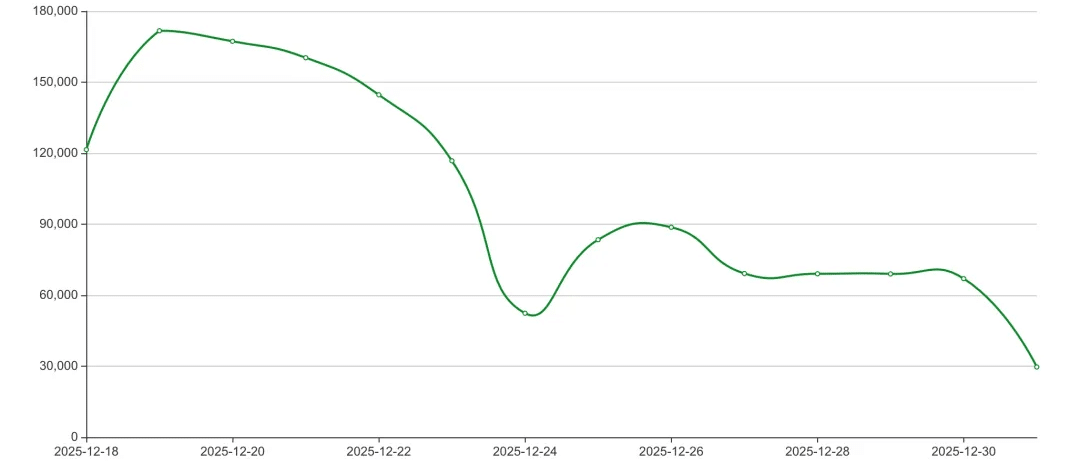
According to the real-time traffic monitoring dashboard provided by GeeTest: Following the launch of Dynamic SVG Validation (2025/12/24), the overall attack volume experienced a “cliff-like” drop of 55% within a very short period.
Where is Dynamic SVG Validation Best Applied?
We do not suggest that every business enable SVG validation by default. Its true value lies in managing extreme, high-intensity adversarial environments. Dynamic SVG—with its dynamic generation, multi-path interaction, and high logical barrier—provides a hardened line of defense in the following critical moments:
Key Business Scenarios
1.When Facing High-Intensity, Customized AI Attacks
- Business Scenarios: Ticket sales for top-tier concerts or limited-edition product drops.
- Description: In these “high-traffic bottleneck” moments, attackers prepare automated scripts in advance. Ordinary verification is often bypassed in milliseconds by vision models trained specifically for that task.
- The SVG Advantage: It uses “logical reasoning” to force a longer interaction time for AI. Amidst tens of thousands of concurrent requests per second, SVG’s complex interactions trap AI in a “thinking swamp,” ensuring valuable inventory is reserved for real users.
2. When Conventional Validation is Breached and Interfaces are Abused
- Business Scenarios: Marketing campaigns being “milked” by bots or SMS interfaces being bombarded.
- Description: If marketing funds (coupons, red envelopes) disappear instantly or your SMS budget is mysteriously drained, it means low-cost cracking tools for standard CAPTCHAs are likely active.
- The SVG Advantage: It steps in as an “Elite Specialist.” Since SVG is generated via real-time code, universal scripts cannot recognize this new, non-image format, quickly severing the automated chain and stopping losses immediately.
3. When Attackers Invest Heavily in Training Specialized Models
- Business Scenarios: Brute-force “Credential Stuffing” on high-value gaming or financial accounts.
- Description: For high-value accounts, attackers are willing to spend more to collect your CAPTCHA images and train a dedicated YOLO vision model for your specific business.
- The SVG Advantage: SVG graphics are “rendered on the fly.” There is no fixed library to scrape. Attackers will find that the logic and structure of the graphics change every single time, making it impossible to build a stable training set. This ensures the “cost of cracking” far exceeds the “profit from theft.”
The Strength Behind the Interface
The complexity of the graphic itself is only the first hurdle. To counter systematic attacks, the key lies in the combination and synergy of backend multi-dimensional technologies. Dynamic SVG is powerful because it is rooted in GeeTest’s full-stack defense system:
- Environment Perception Layer: While the SVG interaction loads, the system launches asynchronous JS challenges and environmental probing. By silently scanning the frontend environment, it assesses the credibility of the terminal in real-time. Whether it is a hidden automation framework (Selenium, Puppeteer), an emulator, or the fingerprint of a device farm, it is identified and blocked here.
- Behavioral Analysis Layer: During the brief 2-second SVG interaction, the GeeTest decision engine does more than check if the “answer is correct.” It analyzes the operation trajectory, temporal logic, and response consistency to accurately distinguish the human behind the screen from a disguised automated script.
Conclusion: The Race Never Ends
AI will continue to evolve, but so will our defenses. The launch of Dynamic SVG Validation is just the beginning of a new paradigm in AI-era security.
At GeeTest, we don’t believe in a “final solution.” We believe in staying one step ahead. Our goal is to provide highly certain, forward-looking security options in an era of rapid technological change.
Try GeeTest Dynamic SVG Validation, or other CAPTCHA Demo here!